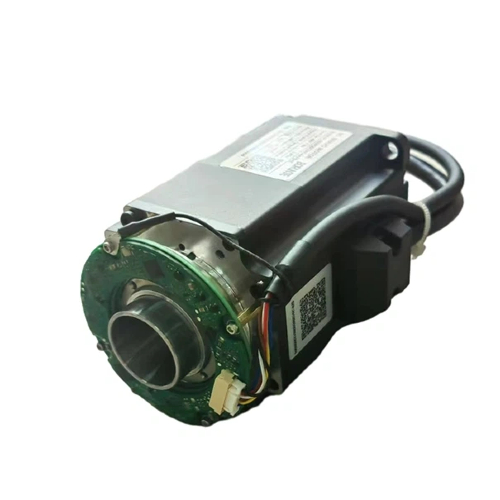
Which motor type truly powers the future of robotics? Frameless Motor Vs Servo Motor is a hot topic in robot joints. These motors are vital for precise, efficient robot movement. In this post, you’ll learn the key differences, benefits, and applications of both motor types.
Table of Contents
Toggle
Direct Comparison: Frameless Motor Vs Servo Motor in Robot Joints
When choosing between frameless motors and servo motors for robot joints, understanding their structural and performance differences is crucial. Both motor types serve as essential robot joint motor types but differ significantly in design, integration, and application.
Structural Differences: Housing, Bearings, and Integration
Servo motors come as fully enclosed units with integrated housing, bearings, and sometimes gearboxes. This sealed package simplifies installation but adds weight and limits mechanical flexibility. Frameless motors, by contrast, consist only of the stator and rotor, lacking housing and bearings. This design allows the motor to be embedded directly into the robot joint structure, leveraging the joint’s bearings and mechanical components for integration. Frameless motor integration robotics thus offers a more compact and customizable solution.
Torque Density and Continuous Torque Performance
Frameless motors typically provide higher torque density than servo motors. Without the weight of housing and bearings, they deliver more continuous torque per unit mass and volume. This advantage makes frameless motor torque characteristics particularly favorable for lightweight, high-performance robot joints. Servo motors, while reliable, often have lower continuous torque relative to their size due to additional structural components.
Weight and Size Impact on Robot Joint Design
Weight and size are critical in robot joint design, especially for humanoid and quadruped robots. Frameless motors’ low profile and reduced weight enable more compact joint geometries and improved dynamic response. Servo motors, with their integrated packages, tend to be bulkier and heavier, which can increase the reflected inertia in the joint and reduce control bandwidth.
Customization and Mechanical Flexibility
Frameless motors excel in customization. Designers can tailor winding configurations, stator shapes, and encoder placements to fit specific joint geometries. This mechanical flexibility supports innovative frameless motor design for robots, optimizing performance and integration. Servo motors offer limited customization since their components are fixed within the housing.
Thermal Management and Heat Dissipation
Thermal management is vital for continuous operation. Frameless motors benefit from direct thermal paths through the robot joint structure, allowing heat to dissipate efficiently. Servo motors rely on their housing for heat sinking, which can limit thermal performance in compact or high-duty applications.
Encoder and Sensor Integration for Precise Control
Precise control depends on accurate encoder integration. Frameless motors require careful alignment of encoders to minimize torque estimation errors, but this also enables high-resolution feedback critical for servo motor precision control. Servo motors come pre-integrated with encoders and sensors, simplifying setup but reducing flexibility in sensor selection or placement.
Cost Implications and Production Considerations
Servo motors tend to have higher upfront costs due to their complete packaging and ready-to-use design. They reduce engineering time and prototyping effort, making them suitable for faster time to market. Frameless motors may lower per-unit costs in volume production but require more engineering resources for integration, alignment, and thermal design.
Advantages of Frameless Motors for Robot Joints
Frameless motors offer several compelling advantages that make them ideal for advanced robot joint applications. Their unique design and integration capabilities unlock performance levels that traditional servo motors often cannot match, especially in lightweight, high-dynamic robotics.
High Torque Density Enabling Compact Joint Design
One of the standout frameless motor advantages for robot joints is their exceptional torque density. By eliminating the housing, bearings, and shaft, frameless motors deliver more continuous torque per unit volume and weight. This high torque density allows engineers to design smaller, more compact joints without sacrificing power or performance. The motor’s electromagnetic core is embedded directly into the joint structure, maximizing space efficiency and enabling tight mechanical integration.
Lightweight and Low-Profile Benefits
Frameless motors are inherently lightweight and low-profile. Without the additional mass of an enclosed casing, these motors reduce the overall joint weight significantly. This reduction is critical in humanoid and quadruped robots, where every gram impacts energy consumption and dynamic response. The slim profile also permits more natural joint geometries, improving robot aesthetics and functional reach.
Enhanced Dynamic Response and Acceleration
Because frameless motors have lower rotor inertia and reduced mechanical complexity, they achieve superior dynamic response and acceleration. This means the robot joint can react faster to control inputs, enabling smoother, more precise movements. High dynamic performance is essential in applications like cobots and agile quadrupeds, where rapid changes in direction and speed are common.
Integration with Harmonic Reducers and Encoders
Frameless motors are designed for seamless integration with harmonic reducers and high-resolution encoders. This integration is crucial for achieving precise torque control and minimizing backlash in the joint. By embedding the motor stator into the joint housing and coupling the rotor directly to the output shaft, the system gains mechanical stiffness and alignment accuracy. Such integration also supports advanced force control algorithms needed in collaborative and humanoid robotics.
Improved Thermal Paths Through Joint Structure
Thermal management is often a limiting factor in motor performance. Frameless motors benefit from direct thermal conduction paths through the robot joint structure itself. Without a bulky housing to insulate heat, the motor windings dissipate heat more efficiently into the joint’s metal framework. This improved thermal path allows for higher continuous torque ratings and longer operational life under demanding conditions.
Customization for Specific Joint Geometries
Another key frameless motor advantage is the ability to customize the motor design to fit specific joint geometries. Manufacturers can adapt stator shapes, winding configurations, and encoder placements to match unique mechanical layouts. This flexibility supports innovative robot joint designs that meet tight space constraints and performance requirements, enhancing overall system integration.
Use Cases in Humanoid and Quadruped Robots
Frameless motors are increasingly favored in humanoid and quadruped robots. These robots demand lightweight, compact joints with high torque and precise control. Frameless motors enable natural, bio-inspired joint movements by reducing inertia and improving responsiveness. For example, in quadrupeds, frameless motors support rapid leg articulation and impact absorption, while in humanoids, they facilitate smooth arm and wrist motions with fine force feedback.
Advantages of Servo Motors for Robot Joints
Servo motors offer a well-established solution for robot joints, especially in industrial and automated guided vehicle (AGV) applications. Their all-in-one design simplifies integration and accelerates development, making them a popular choice for many robotics projects.
All-in-One Sealed Package Convenience
Servo motors come as fully enclosed units, combining the motor, encoder, bearings, and sometimes gearboxes within a sealed housing. This packaging protects internal components from dust and moisture, ensuring reliable operation in harsh industrial environments. The integrated design eliminates the need for separate mounting of motor parts, simplifying mechanical assembly and reducing potential points of failure.
Simplified Prototyping and Faster Time to Market
Because servo motors are ready-to-use modules, engineers can quickly prototype robot joints without extensive custom mechanical design. This reduces development cycles and speeds up time to market. For projects where rapid deployment matters more than ultimate weight savings or torque density, servo motor benefits in robotics are clear. Off-the-shelf servo motors also come with established driver and control ecosystems, easing software integration.
Reliable Bearing and Gearbox Integration
Servo motors typically include precision bearings and gearboxes matched to the motor’s torque and speed characteristics. This integration ensures smooth, low-backlash motion crucial for many industrial robot joint applications. The pre-engineered mechanical components reduce engineering risk and increase system robustness. For example, robot joint servo motors often feature harmonic or planetary gearboxes optimized for their torque output.
Suitable for Industrial and AGV Applications
In industrial arms, pick-and-place robots, and AGVs, servo motors provide consistent performance with minimal customization. Their sealed design and standardized mounting make them ideal for repetitive, high-duty cycle tasks. These motors handle continuous operation well and often include built-in thermal management suited for stationary or semi-stationary joints.
Lower Engineering Integration Effort
Servo motors reduce the engineering workload by providing a complete motor solution. Designers do not need to worry about bonding stators, aligning encoders, or designing thermal paths. This convenience can save months of development time and reduce prototype iteration cycles. For teams with limited motor integration experience, servo motors offer a lower-risk path to functional robot joints.
Limitations in Weight-Sensitive or High-Dynamic Designs
Despite their advantages, servo motors carry extra weight and bulk due to housing and integrated components. This can increase reflected inertia in robot joints, limiting dynamic response and acceleration. For lightweight humanoid or quadruped robots requiring high torque density and rapid joint movements, servo motors may not be ideal. Their fixed mechanical design also restricts customization, making it harder to optimize for specific joint geometries or thermal management needs.
Key Performance Factors Influencing Motor Choice in Robot Joints
Selecting the right motor for robot joints requires deep understanding of several critical performance factors. These factors directly impact the robot’s functionality, control precision, and durability. Below, we explore the key considerations when weighing frameless motor vs servo motor options for robotics.
Torque Requirements and Continuous Thermal Limits
Robot joints demand continuous torque that matches the load and duty cycle. Peak torque ratings alone are misleading. A motor must sustain its rated torque without overheating. Frameless motors typically offer higher torque density, meaning more continuous torque per unit weight and volume. Servo motors, enclosed with bearings and housing, often have lower continuous torque limits due to heat buildup. Proper thermal design is essential to avoid derating.
Cogging Torque and Its Effect on Force Control
Cogging torque causes jerky motion and complicates force control. For robots requiring smooth, compliant interaction—like cobots or humanoids—low cogging is a must. Frameless motors usually achieve cogging torque below 0.5% of rated torque, enabling precise force control. Servo motors vary widely; some have higher cogging due to gearboxes or bearing friction, which can degrade control bandwidth.
Form Factor Constraints Including Hollow Shaft Needs
Joint design often requires routing cables through the motor’s center. Frameless motors can be designed with hollow shafts or integrated directly into the joint structure, facilitating internal cable routing. This reduces joint size and improves aesthetics. Most servo motors have fixed form factors without hollow shafts, so cables must run externally, limiting joint rotation and increasing failure points.
Encoder Resolution and Alignment Importance
High-resolution encoders provide the feedback needed for precise position and torque control. Frameless motor integration robotics demands careful encoder alignment to prevent torque estimation errors. Misalignment scales with current, impacting force sensing accuracy. Servo motors come with pre-aligned encoders, simplifying setup but offering less flexibility. For advanced robotics, encoder resolution and alignment are critical for achieving servo motor precision control.
Reflected Inertia and Its Impact on Control Bandwidth
Reflected inertia is the motor’s rotor inertia multiplied by the square of the gear ratio. High reflected inertia reduces control bandwidth and responsiveness. Frameless motors, integrated coaxially with harmonic reducers, minimize reflected inertia. Servo motors with separate gearboxes and heavier housings tend to increase inertia, which can impair dynamic performance in lightweight robots.
Thermal Management Strategies in Joint Design
Effective heat dissipation extends motor life and maintains torque output. Frameless motors benefit from direct thermal conduction through the joint housing, enhancing thermal paths. Servo motors rely on their casing for heat sinking, which may be less efficient in compact or sealed environments. Designing joints with optimized thermal paths is vital, especially for continuous high-torque applications.
Integration Challenges and Solutions: Frameless Motor Vs Servo Motor
Integrating motors into robot joints requires careful attention to mechanical, electrical, and thermal aspects. The choice between frameless motor and servo motor impacts the complexity and approach to integration significantly.
Mechanical Integration and Mounting Considerations
Frameless motors lack housing and bearings, so the robot joint structure must provide precise mounting surfaces and support. This means bonding the stator securely inside the joint and attaching the rotor rigidly to the output shaft. Proper alignment is crucial to avoid uneven air gaps, which can reduce motor efficiency and increase noise. In contrast, servo motors come as sealed units with integrated bearings, simplifying mounting. However, their fixed form factor can limit joint design flexibility.
Aligning Motor and Encoder for Accurate Torque Sensing
Frameless motor integration robotics demands precise alignment between the motor and encoder. Misalignment creates torque estimation errors that worsen with current load, negatively affecting servo motor precision control. Achieving tight coaxial alignment often requires specialized tooling and multiple design iterations. Servo motors usually have factory-aligned encoders, reducing setup time but offering less flexibility in sensor choice or placement.
Thermal Path Design Differences
Thermal management differs greatly between the two types. Frameless motors rely on the robot joint’s metal structure to dissipate heat directly from the stator windings. This requires designing efficient thermal paths and ensuring good thermal contact surfaces. Servo motors dissipate heat through their housing, which may limit thermal performance in compact or sealed joints. Frameless motor thermal design can yield higher continuous torque ratings but demands more upfront engineering effort.
Design Iteration Cycles and Prototyping Timelines
Due to the integration complexity, frameless motor projects typically involve longer design iteration cycles. Engineers must prototype bonding methods, encoder alignment, and thermal solutions, often requiring 2–3 iterations to optimize. Servo motors reduce iteration time by providing ready-to-install units, accelerating prototyping and time to market. Many robotics teams begin with servo-based modules and transition to frameless integration for production.
Supply Chain and Quality System Requirements
Frameless motors require sourcing multiple components—motor cores, encoders, reducers—often from different suppliers. Managing supply chains and quality systems is more complex but offers greater control. Servo motors consolidate components under one supplier, simplifying procurement and quality assurance. For production programs, frameless motor suppliers with certifications like IATF 16949 provide traceability and consistency critical for robot joint motor applications.
Transitioning from Prototype Modules to Production Designs
A common strategy is to use servo motor-based joint modules for rapid prototyping, then switch to frameless motor integration for production to reduce cost and weight. This transition demands early planning to ensure mechanical interfaces and control systems are compatible. It also requires thorough documentation and validation to maintain performance and reliability after integration changes.
Application-Based Recommendations for Frameless Motor Vs Servo Motor
Choosing the right motor type for robot joints depends heavily on the robot’s application, performance needs, and design constraints. Understanding when to opt for frameless motors versus servo motors can optimize your robot’s functionality, cost, and development timeline.
When to Choose Frameless Motors: Cobots, Humanoids, and Precision Robots
Frameless motors shine in collaborative robots (cobots), humanoid robots, and other precision robotics applications. These robots demand:
High torque density: Frameless motor torque characteristics allow compact, lightweight joints that improve dynamic response and energy efficiency.
Customization: Frameless motor design for robots enables tailored stator shapes and encoder placements to fit complex joint geometries.
Force control: Low cogging torque and precise encoder integration support smooth, compliant interactions essential for human-robot collaboration.
Thermal efficiency: Embedded thermal paths through the joint structure allow sustained continuous torque without overheating.
For example, many advanced humanoid arms and cobots use frameless motors integrated with harmonic reducers and high-resolution encoders for precise servo motor precision control. This results in natural, fluid motions and safer operation alongside humans.
When Servo Motors Are Preferable: Industrial Arms and Simple Joints
Rapid prototyping and deployment are critical, thanks to their all-in-one sealed package.
Reliability and robustness are priorities, as pre-integrated bearings and gearboxes simplify assembly.
Lower engineering integration effort is desired to reduce development time.
Weight sensitivity is less critical, and joint size constraints are relaxed.
For example, standard 6-axis industrial arms often rely on robot joint servo motors with harmonic or planetary gearboxes. These motors offer proven performance with well-supported drive ecosystems, making them ideal for repetitive, high-duty tasks.
Role of QDD Actuators and Harmonic-Integrated Modules
QDD (Quasi-Direct-Drive) actuators combine a high-torque BLDC motor with a low-ratio planetary reducer. They offer backdrivability for leg joints in humanoids and quadrupeds, absorbing impacts and enabling compliant ground contact.
Harmonic-integrated modules package motor, harmonic reducer, encoder, and driver into one unit. They accelerate prototyping but at higher cost and less mechanical flexibility.
These options provide intermediate solutions depending on your robot’s dynamic and control requirements.
Examples of Successful Frameless Motor Applications
Gorilla Mk1: A high-altitude inspection robot using frameless torque motors embedded in wheel drive joints, achieving high torque density and lightweight design for stable operation.
Humanoid robots: Many leading platforms, such as Tesla Optimus and Franka Emika Panda, use frameless motors for upper body joints to maximize torque density and control precision.
Quadrupeds: Frameless motors integrated with harmonic drives support fast, dynamic leg articulation with precise force feedback.
Cost-Benefit Analysis by Robot Type and Joint Function
Robot Type
Motor Choice
Benefits
Considerations
Cobots & Humanoids
Frameless Motors
Lightweight, compact, precise
Higher integration effort
Industrial Arms
Servo Motors
Reliable, fast prototyping
Bulkier, less flexible
Quadrupeds (Legs)
QDD Actuators
Backdrivable, impact absorption
Reduced positioning precision
Simple AGVs
Servo Motors
Standardized, robust
Limited customization
Conclusion
Frameless motors offer high torque density, lightweight design, and customization for precise robot joints. Servo motors provide ready-to-use, reliable solutions for faster prototyping and simpler integration. Choosing depends on application needs, balancing performance with development speed. Future trends favor frameless motors in advanced robotics for better efficiency and control. Engineers should prioritize torque density and integration flexibility for high-performance designs. Tiger Motion Control Co., Ltd. delivers innovative motor solutions that enhance robot joint performance and support diverse engineering needs.
FAQ
Q: What are the main differences in frameless motor vs servo motor for robot joints?
A: Frameless motor vs servo motor differ mainly in design and integration. Frameless motors lack housing and bearings, allowing direct embedding into robot joints for higher torque density and customization. Servo motors are enclosed units with integrated components, simplifying assembly but adding weight and limiting flexibility. This frameless servo motor comparison highlights that frameless motors excel in compact, lightweight designs, while servo motors favor ease of prototyping and reliability.
Q: How do frameless motor advantages for robot joints improve performance?
A: Frameless motor advantages for robot joints include high torque density, lightweight design, and enhanced thermal management via direct heat dissipation through the joint structure. These characteristics enable compact, high-dynamic joints with precise control, making frameless motors ideal for humanoid and quadruped robots requiring smooth, efficient actuation.
Q: Why might servo motor benefits in robotics be preferred over frameless motors?
A: Servo motor benefits in robotics include an all-in-one sealed package with integrated bearings and gearboxes, simplifying mechanical assembly and reducing integration time. This makes servo motors suitable for rapid prototyping, industrial arms, and AGVs where robustness and faster time to market outweigh the need for ultra-lightweight or highly customized designs.
Q: What are the key torque and control differences in servo motor vs frameless motor for robotics?
A: Frameless motor torque characteristics offer higher continuous torque density and lower rotor inertia, enhancing dynamic response. Servo motors provide reliable torque but often have higher reflected inertia due to integrated housings and gearboxes. Frameless motors require precise encoder alignment for servo motor precision control, while servo motors come with pre-aligned sensors, easing setup but reducing customization.
Q: How do integration challenges differ between frameless motor vs servo motor in robot joints?
A: Frameless motor integration robotics demands precise mechanical mounting, encoder alignment, and thermal path design, increasing engineering effort and iteration cycles. Servo motors simplify integration with factory-aligned encoders and sealed housings, reducing design time but limiting customization. Choosing between them balances integration complexity against performance and design flexibility.
Q: What factors influence the cost comparison of frameless motor vs servo motor for robot joints?
A: Servo motors generally have higher upfront costs due to complete packaging and ready-to-use design, reducing engineering time. Frameless motors may lower per-unit costs in volume but require more engineering resources for integration, alignment, and thermal management. Cost-benefit depends on production volume, performance needs, and development timelines.