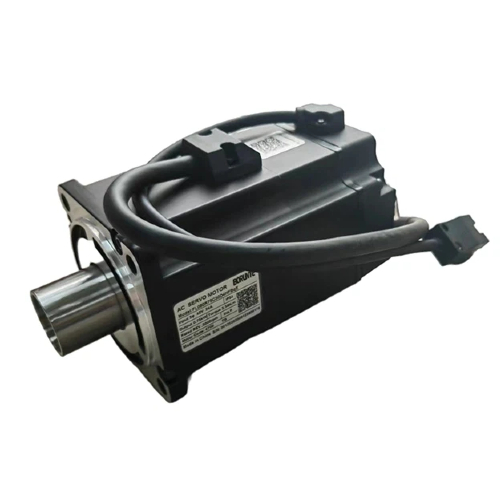
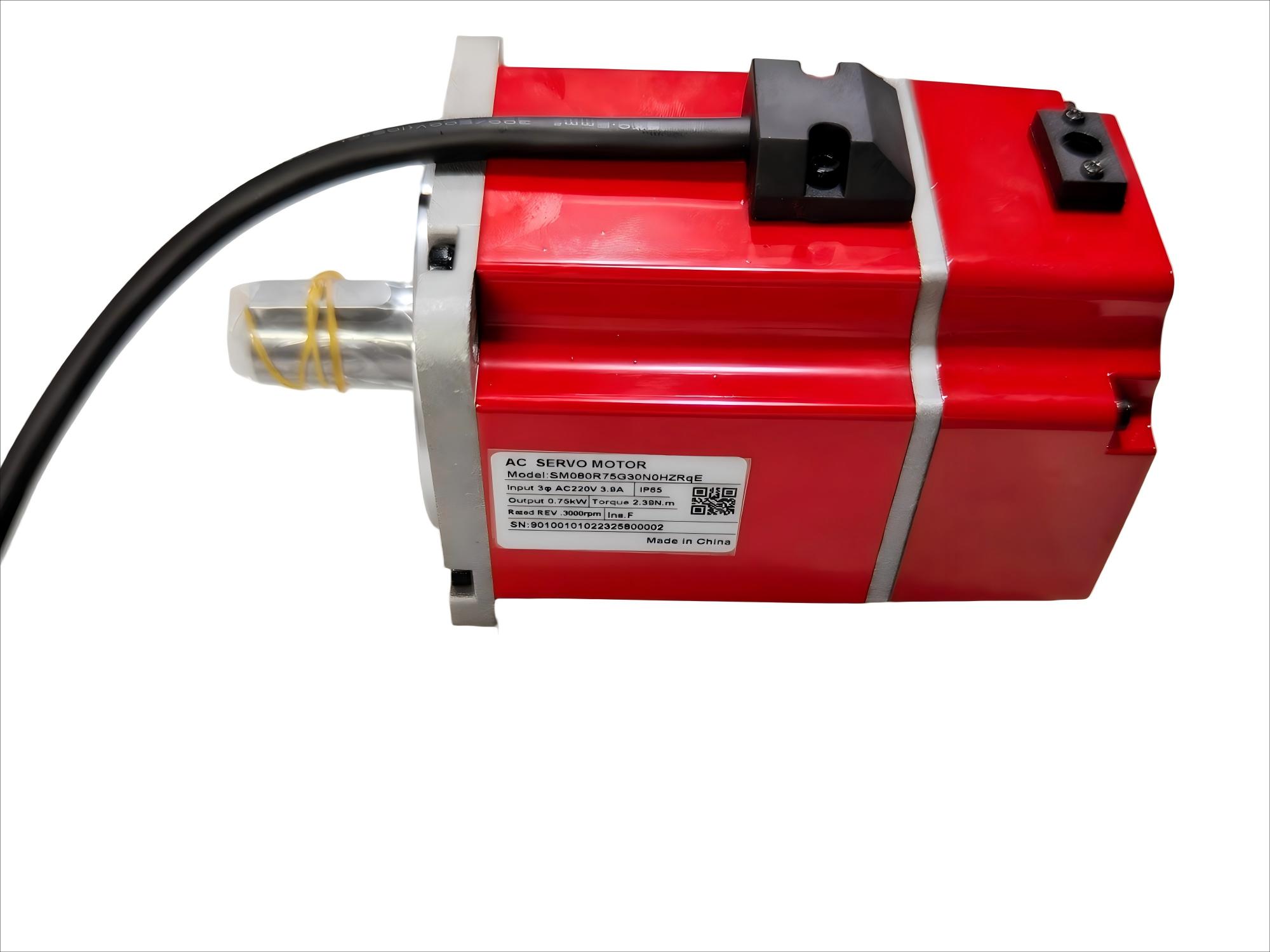
Choosing the right servo motor can make or break an industrial robot’s performance. Many engineers struggle with this critical decision. Servo motors control precise motion and power in robotic systems. Selecting the wrong motor leads to inefficiency and downtime. In this post, you’ll learn key factors in choosing servo motors. We’ll cover torque, speed, motor types, and integration challenges.
Table of Contents
Toggle
Critical Factors to Consider When Choosing a Servo Motor for Industrial Robots
Selecting the right servo motor for industrial robots involves understanding several critical factors that influence performance, reliability, and efficiency. These factors ensure the motor meets the specific demands of robotic applications, such as precise motion control and dynamic load handling.
Understanding Torque Requirements: Continuous, Peak, and Acceleration Torque
Torque is fundamental for servo motor sizing. You must consider:
Continuous Torque: The torque the motor can deliver steadily without overheating. It supports normal operation under consistent load, such as holding a robotic arm in position.
Peak Torque: The maximum torque available for short bursts, essential for starting motion or overcoming sudden load changes.
Acceleration Torque: Torque needed to accelerate the load, overcoming inertia quickly for responsive motion.
Accurately calculating these torque values ensures the servo motor can handle both steady and dynamic load conditions in robotic arms and other industrial servo motor applications.
Determining Required Speed and Its Impact on Performance
Speed, measured in RPM, affects how fast the robot’s joints or actuators move. Higher speeds often reduce available torque, so balancing speed and torque is crucial. Consider:
The robot’s task cycle time.
Mechanical constraints like gearing or belts.
The motor’s rated speed and efficiency at different RPMs.
Matching the servo motor speed to your application prevents undersized motors from stalling or oversized ones from wasting energy.
Selecting the Appropriate Servo Motor Type for Robotics Applications
Servo motors come in various types:
Brushless Servo Motors: Offer high efficiency, low maintenance, and excellent torque control, ideal for industrial robots.
Brushed DC Servo Motors: Simpler but require more upkeep due to brush wear.
AC Servo Motors: Suitable for medium to high voltage industrial settings.
Stepper Servo Motors: Provide precise positioning with feedback but may lack the smoothness of brushless types.
Choose the type that best fits your robot’s precision, speed, and maintenance requirements.
Voltage Compatibility and Its Importance in Industrial Settings
Ensure the servo motor’s voltage rating matches your power supply:
Industrial robots often use 24V, 48V DC, or 200-400VAC three-phase power.
Voltage mismatch can cause underperformance or damage.
Consider voltage fluctuations and ensure the motor and servo motor driver can handle them.
Proper voltage compatibility improves reliability and integration ease.
Duty Cycle Considerations for Reliable Robot Operation
The duty cycle defines how long a motor can run before needing rest:
Continuous Duty (S1): Motor runs indefinitely under constant load.
Short-Time Duty (S2): Motor runs for limited time, then rests.
Intermittent Duty (S3): Cycles of running and resting.
For robotic arms performing repetitive tasks, continuous duty motors are typically preferred to avoid overheating and ensure consistent performance.
Defining the Motion Profile: Speed, Acceleration, and Precision Needs
A detailed motion profile includes:
Maximum and average speeds.
Acceleration and deceleration rates.
Required positioning accuracy.
This profile guides torque and speed requirements and influences servo motor control system selection, ensuring smooth, precise robot movements.
Calculating and Matching Inertia Ratios for Optimal Control
The inertia ratio compares load inertia to motor rotor inertia, adjusted by gear ratios. It impacts control responsiveness:
Ideal inertia ratio ranges from 3:1 to 10:1.
Ratios too high cause sluggish response.
Ratios too low may cause instability.
Proper inertia matching optimizes servo motor sizing and control loop tuning for stable, accurate motion.
Torque Calculations and Their Impact on Servo Motor Selection
Choosing the right servo motor for industrial robots hinges on accurate torque calculations. Torque directly influences the motor’s ability to handle loads, accelerate, and maintain smooth, precise motion. Understanding different torque types and how to calculate them ensures the servo motor meets your robotic arm’s demands without oversizing or risking failure.
Calculating Continuous Torque for Steady Robot Operations
Continuous torque is the steady torque the servo motor must provide during normal operation without overheating. It supports tasks like holding a robotic arm in position or moving at a constant speed. To calculate continuous torque, sum all torques from external forces including gravity and friction:
Tcont=Texternal+Tgravity+Tfriction
External Torque (T_external): Torque due to applied loads on the robot.
Gravity Torque (T_gravity): Calculated as Fg×r, where Fg is gravitational force and r is the lever arm.
Friction Torque (T_friction): Resistance torque from mechanical components.
This calculation ensures the industrial servo motor can sustain required loads during typical robot operations.
Peak Torque and Handling Sudden Load Changes
Peak torque is the maximum torque the servo motor can deliver for short bursts. It’s critical when the robot must overcome sudden load changes, such as starting motion or dealing with unexpected resistance. Peak torque combines continuous torque and acceleration torque:
Tpeak=Tcont+Tacceleration
Selecting a servo motor with adequate peak torque prevents stalling or mechanical stress during dynamic movements.
Acceleration Torque and Overcoming Inertia
Acceleration torque is the torque required to change the robot’s speed, overcoming inertia. It depends on the system’s moment of inertia (J) and angular acceleration (α):
Tacceleration=J×α
For robotic arms, quick acceleration improves responsiveness. Properly sizing the servo motor for acceleration torque ensures smooth speed changes without strain.
Accounting for Friction and External Forces in Torque Calculations
Friction torque arises from contact between moving parts and adds resistance the motor must overcome. It is calculated as:
Tfriction=μ×Fnormal×r
μ: Coefficient of friction.
Fnormal: Normal force.
r: Radius or lever arm.
Minimizing friction through lubrication and design reduces torque demands and extends motor life. External forces such as payload weight or environmental resistance also affect torque requirements and must be included in calculations.
Using RMS Torque for Accurate Load Assessment
Root Mean Square (RMS) torque provides an effective continuous torque value over time, accounting for varying loads during operation. It is calculated as:
TRMS=nT12+T22+…+Tn2
Where T1,T2,…,Tn are instantaneous torque values over a period. Using RMS torque helps select a servo motor that can handle fluctuating
Choosing the Right Servo Motor Type for Industrial Robots
Selecting the appropriate servo motor type is crucial for achieving the desired performance and reliability in industrial robots. Each servo motor type—rotary or linear, AC or DC, brushed or brushless—offers unique characteristics that suit different applications. Understanding these differences helps in making an informed choice aligned with your robot’s specific needs.
Rotary vs. Linear Servo Motors: Application Suitability
Rotary Servo Motors:
These motors provide rotational motion, commonly used in robotic joints and rotary actuators. They are versatile and widely adopted due to their compact size and ease of integration with gearboxes or belts.
Linear servo motors generate direct linear motion without the need for mechanical transmission elements like screws or belts. They offer high precision and fast response but usually at a higher cost and with more complex installation requirements.
Choosing between rotary and linear depends on the motion type required. For most industrial robots, rotary servo motors are standard, but linear servo motors excel in applications demanding direct linear displacement with minimal mechanical backlash.
AC Servo Motors: Low, Medium, and High Voltage Options
AC servo motors are favored in industrial settings for their robustness and efficiency. They operate on alternating current and come in various voltage classes:
Low to Medium Voltage AC Servo Motors (e.g., 100-400 VAC):
Compact and efficient, suitable for medium-duty robotic applications. They offer good torque density and precise control.
High Voltage AC Servo Motors (above 400 VAC):
Designed for heavy-duty industrial robots requiring high power and torque. These motors often feature synchronous designs for enhanced accuracy.
AC servo motors typically require sophisticated servo motor controllers and drivers to manage their vector control and feedback systems effectively. They are well-suited for applications demanding high speed, torque, and reliability.
DC Servo Motors: Brush and Brushless Variants
Brushed DC Servo Motors:
These motors use brushes to transfer current to the rotor. They are simple and cost-effective but require regular maintenance due to brush wear. Their servo motor characteristics include moderate efficiency and torque control.
Brushless DC Servo Motors:
Brushless variants eliminate brushes, reducing maintenance and improving efficiency. They provide higher torque-to-inertia ratios and smoother operation, making them ideal for precision industrial robots. The integration of a servo motor with encoder is common in brushless motors, enabling closed-loop control systems for accurate positioning.
Brushless DC servo motors are increasingly preferred in robotic arms and industrial servo motor applications due to their longevity and performance.
Stepper Servo Motors with Feedback for Precision Control
Stepper servo motors combine the stepwise motion of traditional stepper motors with feedback devices like encoders. This combination allows for closed-loop control, enhancing precision and torque efficiency.
Advantages:
Precise positioning without needing complex tuning.
High torque at low speeds.
Good for applications requiring repeatability and simple control.
Limitations:
Less smooth motion compared to brushless servo motors.
Lower top speeds and torque density.
Stepper servo motors suit applications where cost-effective precision is needed but ultra-smooth motion is not critical.
Pros and Cons of Each Servo Motor Type in Robotics
Servo Motor Type
Pros
Cons
Typical Applications
Rotary Servo Motors
Versatile, compact, widely available
Requires mechanical transmission for linear motion
Robotic joints, CNC machines
Linear Servo Motors
Direct linear motion, high precision, fast response
Higher cost, complex installation
Pick-and-place robots, precision tables
AC Servo Motors
High power, robust, precise control
Requires complex controllers, higher cost
Heavy-duty industrial robots
Brushed DC Servo Motors
Simple, low cost
Maintenance-heavy, lower efficiency
Low-cost, low-duty applications
Brushless DC Motors
High efficiency, low maintenance, smooth control
Higher initial cost
Precision robotic arms, automated systems
Stepper Servo Motors
Precise positioning, simple control
Less smooth, lower speed and torque density
Cost-sensitive precision tasks
Integrating Servo Motors with Control Systems in Industrial Robots
Integrating the servo motor seamlessly with the control system is vital for precise and reliable robot operation. The servo motor control system manages position, speed, and torque through feedback and communication with the controller. When selecting a servo motor for industrial robots, engineers must ensure compatibility and optimal integration with the chosen control architecture.
Ensuring Control Interface Compatibility
A key step is verifying that the servo motor controller and servo motor driver interfaces are compatible with your existing control system. Common control interfaces include analog signals, pulse-and-direction, and digital fieldbus protocols. Mismatched interfaces can cause communication errors or require additional converters, complicating installation and increasing costs.
Ensure the servo motor and its drive support the control signals used by your programmable logic controller (PLC) or motion controller. This guarantees smooth command execution and feedback reception.
Communication Protocols: EtherCAT, CANopen, and Pulse-and-Direction
Modern industrial robots often use advanced communication protocols for multi-axis synchronization and real-time data exchange:
EtherCAT: A high-speed, deterministic Ethernet-based protocol widely adopted in robotics for synchronized control and diagnostics. It supports multiple axes with minimal latency, improving robot coordination.
CANopen: A robust fieldbus protocol popular in industrial automation. It offers good real-time performance and device interoperability, suitable for distributed servo motor control systems.
Pulse-and-Direction: A simpler, legacy interface that sends step pulses and direction signals. It works well for single-axis or basic control but lacks advanced diagnostics and multi-axis synchronization.
Choosing the right protocol depends on your robot’s complexity, required cycle time, and existing infrastructure.
Feedback Systems: Incremental vs. Absolute Encoders
Servo motors rely on feedback devices to provide position and speed information. The two main encoder types are:
Incremental Encoders: Provide relative position data by counting pulses. They require a homing cycle at startup to establish a reference point. Incremental encoders are cost-effective and commonly used but can lose position data during power loss.
Absolute Encoders: Deliver exact position data immediately upon startup without needing homing. They store position in non-volatile memory, enhancing reliability in critical applications and reducing downtime.
For industrial servo motor applications where precise and continuous position tracking is essential, servo motors with absolute encoders are preferred.
Safety Features and Compliance Requirements for Servo Drives
Safety is paramount in industrial robotics. Servo drives now commonly include safety functions such as Safe Torque Off (STO), which instantly removes torque to prevent hazardous motion. Compliance with standards like IEC 61800-5-2 and machinery directives ensures your servo motor control system meets legal and operational safety requirements.
Additional safety features may include overcurrent protection, encoder cable break detection, and position error monitoring. Selecting servo drives with integrated safety functions simplifies certification and enhances operator protection.
Optimizing Control Loop Tuning for Precise Motion
The servo motor control system uses feedback loops, often PID (proportional-integral-derivative) controllers, to maintain accuracy and stability. Proper tuning of these control loops is critical to avoid overshoot, oscillations, or sluggish response.
Factors influencing tuning include:
Load inertia and inertia ratio
Friction and external disturbances
Desired motion profile and precision
Advanced servo drives offer auto-tuning features that simplify setup and improve performance. Ensuring your servo motor and control system support tuning capabilities will yield smoother, more precise robot movements.
Environmental and Application-Specific Considerations
When selecting a servo motor for industrial robots, environmental and application-specific factors are crucial for ensuring sustained performance and reliability. Ignoring these can lead to premature motor failure or degraded robot operation. Let’s explore the key considerations.
Impact of Ambient Temperature on Servo Motor Performance
Ambient temperature directly affects the thermal limits and continuous torque capacity of an industrial servo motor. Higher temperatures reduce the motor’s ability to dissipate heat, risking overheating and shortened life. Most servo motor specifications list maximum operating temperatures, often between 40°C and 60°C.
In harsh environments, consider:
Motors with higher thermal ratings.
Additional cooling methods such as forced air or liquid cooling.
Using servo motor drivers with temperature monitoring.
Proper thermal management ensures the motor maintains its torque and speed characteristics without derating.
Dealing with Contamination and Vibration in Industrial Settings
Industrial environments often expose servo motors to dust, dirt, oil, and vibrations. Contaminants can enter the motor housing, affecting bearings and windings. Vibration can cause mechanical wear and degrade encoder signals.
Mitigation strategies include:
Using sealed or IP-rated servo motors to prevent ingress.
Installing vibration dampers or isolators.
Employing servo motors with robust bearing designs.
Selecting servo motors with encoders designed for noisy environments.
These measures help maintain servo motor characteristics and prolong service life in challenging conditions.
Selecting Appropriate Gearing and Reducers for Load Matching
Gearing and reducers optimize torque and speed to the robot’s load requirements. They also influence the reflected inertia seen by the servo motor, affecting control responsiveness.
Key points:
Gear reducers increase output torque while reducing speed.
Proper gear ratio selection helps match servo motor sizing to the load.
Consider the inertia of the gearbox when calculating total system inertia.
Harmonic drives and planetary gearboxes are common in robotic arms for compactness and precision.
Choosing the right gearing ensures the servo motor operates efficiently within its torque and speed specifications.
Thermal Management and Overheating Prevention
Beyond ambient conditions, servo motors generate heat during operation. Overheating reduces efficiency and damages insulation.
Effective thermal management includes:
Monitoring motor winding temperature via built-in sensors.
Using servo motor drivers with thermal protection features.
Ensuring adequate ventilation or cooling in the robot enclosure.
Avoiding duty cycles that exceed motor thermal limits.
Maintaining optimal temperature prevents thermal shutdowns and extends motor life.
Maintenance and Life Expectancy Factors for Servo Motors
Maintenance influences the long-term reliability of servo motors for industrial robots. Key maintenance considerations:
Regular inspection and lubrication of bearings if applicable.
Checking encoder alignment and cable integrity.
Cleaning to prevent contamination buildup.
Monitoring operating parameters via servo motor control systems for early fault detection.
Life expectancy depends on operating conditions, load profiles, and maintenance quality. Proper selection and upkeep can yield tens of thousands of operating hours.
Cost, Efficiency, and Long-Term Reliability in Servo Motor Selection
Selecting the right servo motor for industrial robots means balancing cost, efficiency, and reliability. These factors directly affect your system’s performance, maintenance needs, and total cost of ownership. Let’s break down what to consider.
Balancing Initial Cost with Performance and Durability
The upfront price of a servo motor often influences purchasing decisions. However, the cheapest option may not deliver the required performance or last long in demanding industrial environments. Investing in a high-quality industrial servo motor or brushless servo motor typically pays off by reducing downtime and maintenance costs.
Consider:
Motor type and technology (brushless motors usually cost more but last longer).
Quality of components like bearings and encoders.
Manufacturer reputation and warranty terms.
Durability ensures the servo motor withstands continuous operation and harsh conditions without frequent replacements.
Efficiency Considerations: Torque Constant and Current Consumption
Efficiency affects how much electrical power the servo motor consumes to produce torque. The torque constant (Kt) is a key specification showing how effectively a motor converts current into torque. A higher Kt means the motor generates more torque per ampere, resulting in lower current consumption and less heat generation.
Benefits of efficient servo motors include:
Reduced energy costs.
Lower thermal stress, extending motor life.
Smaller, cost-effective servo motor drivers and cooling requirements.
When sizing your servo motor, check the torque constant and compare current draw at your expected operating torque.
Evaluating Motor Life Expectancy Based on Application Demands
The life expectancy of a servo motor depends on operating conditions like load cycles, ambient temperature, and duty cycle. Motors running near their continuous torque limits or exposed to high temperatures degrade faster.
To improve life expectancy:
Avoid operating the servo motor at or near peak torque continuously.
Use motors with thermal protection and temperature monitoring.
Follow recommended maintenance schedules.
Selecting a servo motor with a margin above your calculated torque and speed demands helps ensure long-term reliability.
Avoiding Oversizing and Undersizing for Cost-Effective Solutions
Oversizing a servo motor increases initial cost and energy consumption unnecessarily. Undersizing risks stalling, overheating, and premature failure. Proper servo motor sizing involves:
Accurate torque calculations including continuous, peak, and acceleration torque.
Matching speed and inertia ratios.
Considering duty cycle and motion profile.
A well-sized servo motor optimizes cost, efficiency, and reliability.
Investing in Quality Components to Reduce Downtime and Maintenance
High-quality servo motor components like precision bearings, robust encoders, and reliable servo motor controllers reduce failures and maintenance frequency. For example:
Servo motors with integrated encoders offer precise feedback and reduce wiring complexity.
Reliable servo motor drivers with protective features prevent damage from electrical faults.
Components designed for industrial environments resist contamination and vibration.
Choosing quality parts upfront minimizes costly downtime and extends the service life of your robotic system.
Conclusion
Choosing the right servo motor requires careful evaluation of torque, speed, motor type, and environmental factors. Avoid undersizing or oversizing to ensure efficiency and reliability. Proper selection enhances robot precision, reduces maintenance, and extends motor life. Engineers should prioritize motors with integrated feedback and suitable control compatibility. Tiger Motion Control Co., Ltd. offers high-quality servo motors designed for industrial robots, delivering excellent performance and durability to optimize your automation systems. Their products provide reliable, efficient solutions tailored to demanding applications.
FAQ
Q: What are the key servo motor selection criteria for industrial robots?
A: Key servo motor selection criteria include continuous, peak, and acceleration torque requirements, speed matching, duty cycle, and compatibility with the servo motor control system. Accurate torque calculations and proper servo motor sizing ensure reliable performance in robotic arms and other industrial applications.
Q: How does the servo motor torque affect robotic arm performance?
A: Servo motor torque, including continuous and peak torque, determines the motor’s ability to handle loads and accelerate the robotic arm smoothly. Proper torque sizing prevents stalling and mechanical stress, ensuring precise and efficient motion control in industrial servo motor applications.
Q: Why choose a brushless servo motor with encoder for industrial robots?
A: Brushless servo motors with integrated encoders offer high efficiency, low maintenance, and precise feedback for closed-loop control. This combination enhances accuracy, reliability, and longevity, making them ideal for demanding industrial robot applications.
Q: How important is servo motor control system compatibility?
A: Compatibility between the servo motor, servo motor driver, and controller ensures seamless communication via protocols like EtherCAT or CANopen. This integration is vital for precise position, speed, and torque control in industrial robots, improving performance and safety.
Q: What environmental factors influence servo motor selection for industrial robots?
A: Ambient temperature, contamination, vibration, and thermal management impact servo motor specifications and durability. Selecting servo motors with appropriate IP ratings, cooling methods, and robust construction helps maintain performance and extend life in harsh industrial environments.