Introduction
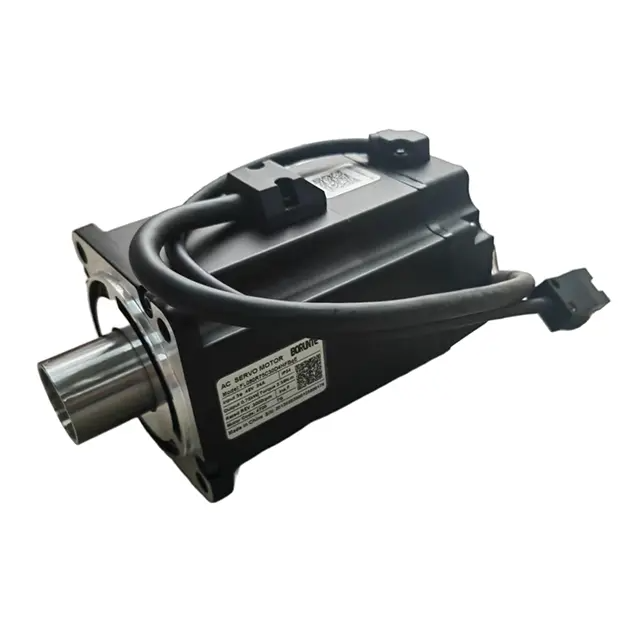
In the ever-evolving world of industrial automation, space and energy efficiency have become paramount. With manufacturing facilities pushing for smarter, faster, and more compact machines, the demand for agile and high-performance motion control systems is skyrocketing. At the heart of these systems lies the Low Voltage Servo Motor—a highly efficient and precise actuator tailored for modern automation demands.
Unlike traditional high-voltage motors, low voltage servo motors are engineered to operate at voltages typically under 60VDC, offering greater safety, efficiency, and integration flexibility. Whether it’s in small robotics, conveyor modules, or mobile AGVs (Automated Guided Vehicles), these motors are redefining how automation is designed and deployed.
What Is a Low Voltage Servo Motor?
Definition and Functionality
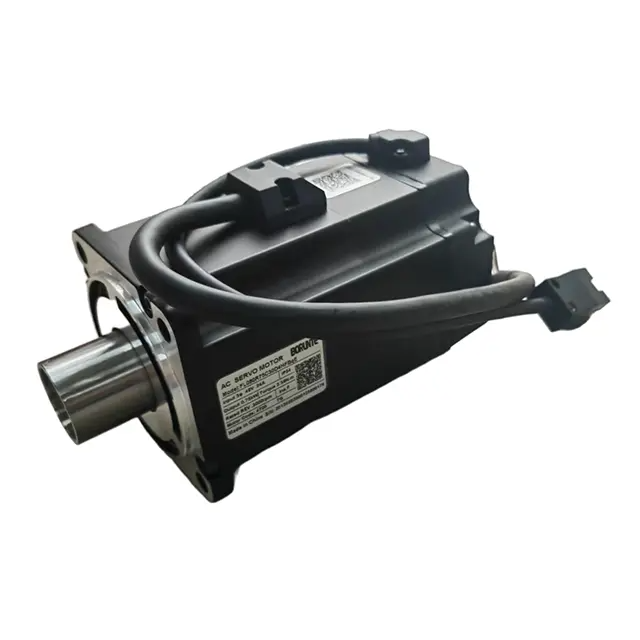
A Low Voltage Servo Motor is a type of rotary actuator that provides precise control of angular position, speed, and acceleration, driven by a low voltage DC power source—usually 24V, 36V, or 48V. Unlike conventional motors that require complex electrical infrastructure, these motors operate safely within low-voltage environments, making them ideal for compact and mobile systems.
Their internal feedback system (usually with encoders or resolvers) allows closed-loop operation, ensuring superior precision. They can also feature dual output shafts, enabling multi-directional power transmission in space-restricted environments—a key innovation for modern automated platforms.
These motors are typically used in applications such as:
Core Advantages of Using Low Voltage Servo Motors
1. Enhanced Safety in Low-Voltage Environments
One of the most critical benefits of low voltage servo motors is operational safety. By operating below the 60VDC threshold, these motors minimize the risk of electrical shock and fire hazards. This makes them particularly suitable for collaborative robots (cobots) and automated systems that share workspace with human operators.
Additionally, safety regulations in many countries promote or mandate low voltage use in certain applications. Leveraging low voltage motors ensures compliance with such industrial safety standards without compromising on performance.
2. Compact Design and Space Efficiency
Traditional servo motors can be bulky, especially when high power output is needed. In contrast, low voltage servo motors are compact and lightweight, engineered specifically for tight spaces where every millimeter counts. This makes them perfect for use in mobile platforms like AGVs, where weight and space restrictions are strict.
Despite their size, these motors do not sacrifice torque or accuracy. Their mechanical configuration, including dual-shaft designs, allows better layout flexibility and reduces the need for additional gear units, ultimately contributing to a more streamlined design.
Improved Energy Efficiency and Thermal Management
High Torque at Low Voltage = Better Efficiency
Low voltage servo motors are incredibly energy-efficient. Their ability to generate high torque even at low voltages means they can maintain performance while consuming less power. This is crucial in battery-powered devices such as delivery robots or inspection drones, where energy conservation directly affects operational time.
Because they draw less current, these motors produce less heat compared to traditional high-voltage units. Lower thermal output helps preserve internal components, reducing the need for bulky heat sinks or cooling systems. This results in a longer motor lifespan and lower maintenance requirements.
Advanced Control and Motion Precision
Integrated Feedback Systems Ensure Accuracy
Low voltage servo motors typically incorporate high-resolution encoders that provide real-time feedback on position and speed. These closed-loop systems guarantee precision and repeatability, making them ideal for tasks where meticulous motion control is critical—such as labeling, laser cutting, or robotic pick-and-place operations.
With support for advanced control protocols like CANopen or Modbus, these motors integrate seamlessly with most industrial PLCs and motion controllers. This level of precision empowers automation designers to build systems that can execute even the most complex multi-axis motions with remarkable reliability.
Easy Integration and Modular Flexibility
Plug-and-Play Installation and Dual Output Shafts
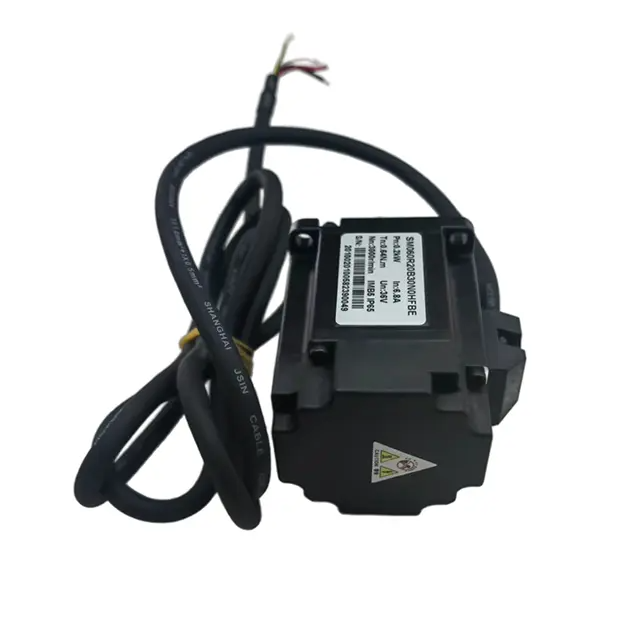
One of the standout features of some low voltage servo motors is the dual output shaft configuration. This allows for synchronized motion on both ends of the motor shaft—perfect for modular conveyors, gantry systems, or robotic arms requiring bi-directional drive.
Furthermore, these motors are designed for quick installation and easy wiring. Their compact form factor means they can be mounted in tight spaces, and with simplified connectors, setup times are reduced significantly. For integrators and engineers, this saves both time and costs during system assembly.
Application Versatility and Scalability
From Prototypes to Production-Scale Systems
Low voltage servo motors offer unmatched versatility. Their scalability means that the same motor type can be used across various stages of a product’s lifecycle—from prototyping to full-scale production. Whether you are developing a laboratory automation system or an entire fleet of service robots, these motors adapt effortlessly.
This adaptability is especially beneficial in Industry 4.0 environments, where modularity and upgradability are essential. Their compatibility with smart sensors, cloud-based monitoring tools, and machine learning algorithms positions them as future-proof components in next-gen smart factories.
Frequently Asked Questions (FAQ)
Here are some common queries related to Low Voltage Servo Motors that engineers and automation professionals often have:
| Question | Answer |
| What is the typical voltage range for low voltage servo motors? | Most operate within 24V to 60VDC, with 48V being the most common. |
| Are they suitable for battery-powered applications? | Yes, their high torque and energy efficiency make them ideal for mobile robots and portable equipment. |
| How do they compare with stepper motors? | Servo motors offer higher precision, faster response, and closed-loop control, while stepper motors are simpler but less accurate. |
| Can they operate in harsh environments? | Many low voltage servo motors come with IP65-rated enclosures and robust builds, making them suitable for industrial use. |
| Do they require an external controller? | Yes, they usually connect to an external driver/controller compatible with protocols like CANopen or RS485. |
Conclusion
If your automation project demands precision, safety, energy efficiency, and space optimization, then integrating a Low Voltage Servo Motor is a strategic move. These motors offer unmatched benefits for compact automation systems—whether in industrial settings, research facilities, or commercial applications.
Their modular design, real-time feedback, and versatile voltage compatibility make them indispensable in today’s smart manufacturing ecosystems. As industries continue to embrace digital transformation and robotics, the low voltage servo motor is poised to remain a key enabler of automation success.


