

Views: 0 Author: Site Editor Publish Time: 2025-12-09 Origin: Site


In the world of industrial machinery, selecting the right type of motor is crucial to ensuring efficiency, reliability, and cost-effectiveness in operations. Among the various options available, a 7.5KW synchronous motor stands out as an excellent choice for many industrial applications. This article will explain what makes synchronous motors particularly beneficial, why the 7.5KW model is a popular option, and how it can be a valuable asset to various industrial sectors. Additionally, we will explore the key benefits and applications of this motor and why it might be the right choice for your specific needs.
Before diving into why a 7.5KW synchronous motor is an excellent option for industrial applications, it's important to understand what a synchronous motor is. Simply put, a synchronous motor is a type of AC (alternating current) motor that operates at a constant speed, known as the synchronous speed, regardless of the load it is driving. The motor’s speed is directly linked to the frequency of the supply current and the number of poles in the motor.
Unlike an induction motor, where the rotor speed lags behind the supply frequency (i.e., there is "slip"), a synchronous motor runs at exactly the same speed as the supply current’s frequency. This characteristic provides several advantages in industrial settings, especially when precision and consistency are key.
Constant Speed: Synchronous motors run at a constant speed, which makes them ideal for applications requiring precision and uniformity in operation.
Efficiency: These motors are more efficient than induction motors at higher loads, as they do not require a slip to operate.
Power Factor Correction: Synchronous motors can help correct the power factor in industrial facilities, reducing energy costs.
Durability: With fewer moving parts that can wear out, synchronous motors tend to last longer and require less maintenance than their asynchronous counterparts.
The 7.5KW synchronous motor offers a range of benefits that make it a preferred choice in various industrial applications. Here's why this particular size is so popular:
A 7.5KW motor provides enough power for medium-duty applications while being compact and manageable. It’s a perfect choice for machines and processes that require continuous, stable operation without the need for an extremely high power rating.
For many industrial tasks, a motor that can deliver more power than a smaller 1KW or 2KW motor but is more efficient and cost-effective than larger motors is necessary. A 7.5KW motor strikes this balance and ensures that you get the best of both worlds in terms of power output and size, allowing for more efficient use of space and resources.
One of the most significant advantages of a 7.5KW synchronous motor is its energy efficiency. Compared to induction motors, synchronous motors tend to have lower energy losses, making them an attractive option for industries where energy costs are a concern.
Synchronous motors are often used for power factor correction as well. Since these motors can be designed to operate with a leading power factor, they help reduce reactive power demand from the electrical grid. This helps minimize electricity costs, especially in large industrial facilities where energy usage is high.
The ability to maintain a constant speed, regardless of load variations, is a key feature of synchronous motors. This is particularly useful for applications requiring highly precise speed control, such as conveyor systems, pumps, or mills. When consistent speed is critical for product quality or process accuracy, a synchronous motor can provide the necessary stability.
This stability also reduces wear and tear on the system components, as there is no fluctuation in speed, leading to extended service life and fewer maintenance requirements.
A 7.5KW synchronous motor is designed to perform efficiently under load. Unlike induction motors, which tend to lose efficiency as the load increases, synchronous motors maintain their efficiency levels even under full load conditions. This makes them ideal for continuous industrial processes where load conditions can fluctuate.
Many 7.5KW synchronous motors come equipped with regenerative braking systems. This feature allows the motor to convert excess kinetic energy back into electrical energy, which is then fed back into the power grid. This process helps save energy and reduces the overall consumption of the system, leading to cost savings in the long run.
Synchronous motors tend to have fewer moving parts than induction motors, which reduces the potential for wear and tear. This means that the 7.5KW synchronous motor is often more durable and has a longer operational life, which can significantly reduce maintenance costs over time.
Synchronous motors offer a high degree of flexibility. They can be operated at different power factors (leading or lagging), making them versatile for a wide range of industrial applications. They can also be used in applications that require precise synchronization with other systems, such as multi-drive configurations or systems where the speed of operation needs to remain constant.
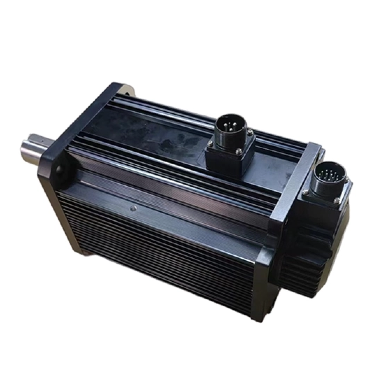
A 7.5KW synchronous motor can be used across a wide range of industries. Some of the most common applications include:
Synchronous motors are widely used to drive pumps and compressors, particularly in industries like water treatment, oil and gas, and HVAC systems. The ability to maintain a consistent speed ensures that pumps operate efficiently, providing reliable performance in critical processes such as fluid movement, gas compression, and cooling.
In manufacturing plants and warehouses, conveyor systems are used to move materials from one place to another. A 7.5KW synchronous motor can provide the precise speed control required for conveyor belts, ensuring that materials are transported efficiently without variation in speed, which could cause jams or disruptions in the production process.
Textile machinery often requires motors that can provide consistent, reliable power. A 7.5KW synchronous motor is used in various textile applications such as spinning, weaving, and knitting machines, where precise speed control is essential to ensure uniform production quality.
Industries that involve milling, grinding, or other heavy-duty manufacturing processes require motors that can deliver steady, reliable performance under varying load conditions. A 7.5KW synchronous motor is a suitable option in these applications, providing the necessary torque and stability for these heavy machines.
Synchronous motors are ideal for driving centrifugal fans and blowers, which are used in ventilation systems, industrial cooling systems, and in processes that require air movement at a constant rate. The stable speed of the motor ensures that the fans or blowers operate without fluctuation, maintaining consistent airflow.
In power plants, synchronous motors are sometimes used to drive auxiliary equipment, such as generators and other machinery. Their ability to operate at a constant speed is essential for maintaining the stability of power generation systems, where precise synchronization with the grid is critical.
The 7.5KW synchronous motor is a powerful, efficient, and reliable choice for a wide variety of industrial applications. Whether you're looking to power pumps, compressors, conveyor systems, or any other machinery that requires precise speed control, this motor provides a solution that balances power, size, and energy efficiency. By offering advantages like constant speed operation, power factor correction, regenerative braking, and long lifespan, a 7.5KW synchronous motor is a smart investment for industries looking to improve performance and reduce operational costs.
For businesses seeking high-quality motors for their industrial needs, Tiger Motion Control Co., Ltd. is a leading supplier of synchronous motors and motion control systems. With a commitment to quality and customer satisfaction, Tiger Motion Control offers a range of products designed to meet the demands of modern industries, helping businesses optimize performance, reduce energy consumption, and enhance operational efficiency.


