Introduction
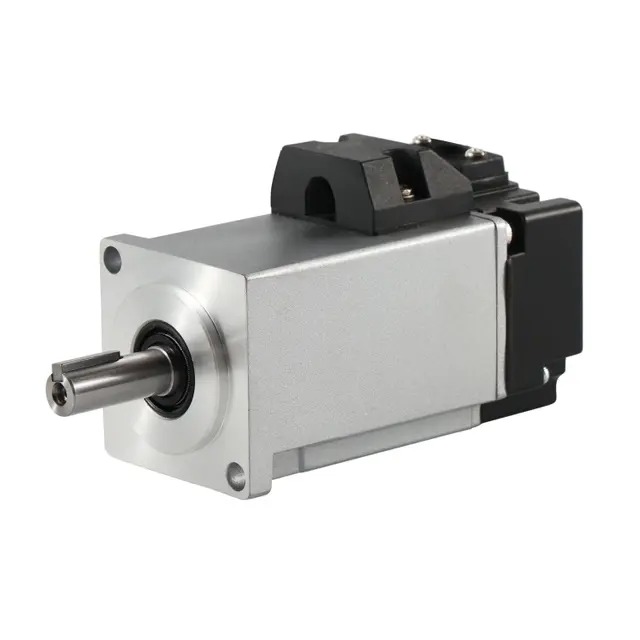
In the evolving world of automation, innovation is not just an advantage—it’s a necessity. One of the most significant advancements transforming modern automated guided vehicles (AGVs) and robotics is the low voltage servo motor, particularly those with dual output shafts. These compact, energy-efficient motors are engineered to meet the specific demands of autonomous machines operating in constrained environments, offering a perfect balance between performance and flexibility.
While traditional motors have long served industrial automation, they often fall short when compact size, precise control, and low power consumption are essential. Low voltage servo motors step into this gap, redefining how AGVs and robots move, respond, and perform. But what makes dual output shaft variants so indispensable in these fields? Let’s explore.
What is a Low Voltage Servo Motor?
At its core, a low voltage servo motor is an electric motor powered by voltages typically below 60V, often 24V or 48V. Unlike standard industrial servo motors that operate on high voltage (usually 220V or 380V), these motors are designed for applications where safety, mobility, and compact integration are critical.
Key Characteristics:
Voltage Range: 24V–48V DC
Compact Form Factor
High Torque Density
Integrated Position Feedback
Low Heat Generation
Energy Efficient Operation
These motors are particularly popular in battery-powered devices, where minimizing power consumption directly influences operational longevity.
The use of low voltage minimizes the risks associated with electrical hazards, making them suitable for mobile platforms, collaborative robots (cobots), and especially AGVs operating in environments alongside human workers.
The Dual Output Shaft Advantage: Powering Two Directions Simultaneously
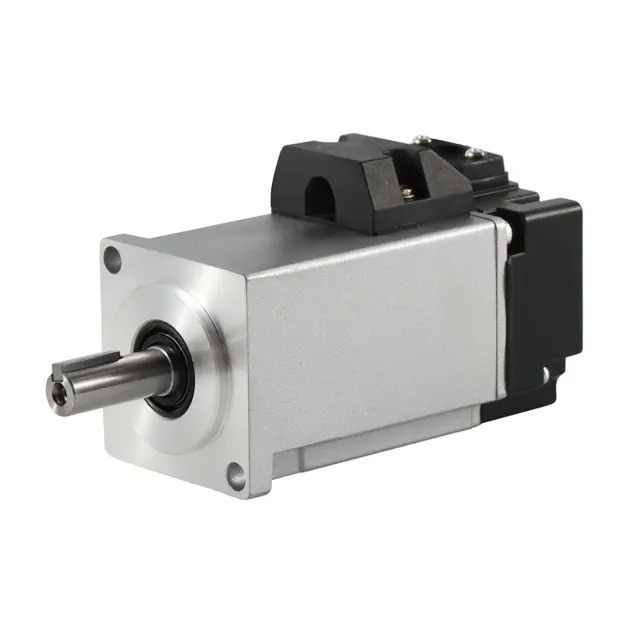
In standard servo motors, you typically get a single output shaft that transfers torque to one side of the mechanism. However, dual output shaft motors feature a shaft extending from both ends of the motor, allowing for torque transmission in two directions simultaneously.
How Does This Help?
Simplifies Mechanical Design: Dual output shafts reduce the need for extra components like pulleys and couplings.
Supports Symmetrical Load Distribution: Ideal for AGV wheels that require mirrored operation.
Space Efficiency: One motor can do the job of two, saving valuable room in tightly packed automation platforms.
Enhanced Synchronization: Perfect for robotic arms or conveyors that require identical movement on both ends.
By integrating this functionality into low voltage servo motors, manufacturers combine energy safety with maximum mechanical utility, which is especially useful in dual-wheel AGV drives, differential drive platforms, and robotic linkages.
Why AGVs and Robots Prefer Low Voltage Solutions
Autonomous Guided Vehicles (AGVs) and robots operate under a strict set of design constraints, including size, weight, power efficiency, and operational safety. Here's how low voltage servo motors address these challenges:
1. Battery Compatibility
Most AGVs are battery-operated to ensure mobility. Low voltage motors consume less power and align perfectly with 24V or 48V battery systems, reducing the need for bulky transformers or converters.
2. Safety Compliance
Operating in public or mixed-use industrial environments necessitates adherence to low-voltage directives, reducing electrical risks to human operators and other machinery.
3. Reduced Heat Output
Heat is the enemy of compact machines. Low voltage motors produce significantly less thermal load, which:
Increases system reliability
Extends component lifespan
Reduces the need for active cooling
4. Precise Control
With high-resolution encoders and integrated feedback loops, these motors offer pinpoint motion control, crucial for:
5. Easy Maintenance and Replacement
Low voltage systems simplify electrical architecture, leading to faster maintenance and reduced system downtime. This benefit is amplified in AGVs and robots that need to operate 24/7.
Real-World Applications of Dual Output Shaft Low Voltage Servo Motors
Here’s a practical breakdown of how these motors fit into the real-world functionality of AGVs and robotic systems:
| Application | Role of Dual Output Shaft Low Voltage Servo Motor |
| AGV Drive Wheels | Drives both left and right wheels with one motor, allowing differential steering. |
| Robotic Arms | Powers two joints or axes with symmetrical control from one motor unit. |
| Conveyor Transfers | Ensures balanced rotation and linear motion across symmetrical rollers. |
| Sorting Robots | Simultaneous actuation of arms or grippers on both sides. |
| Automated Inspection Systems | Rotates both ends of a platform or camera arm for synchronized motion. |
This integration not only improves system performance but also reduces mechanical complexity, cost, and potential points of failure.
Technical Features to Look for in a Quality Low Voltage Servo Motor
When selecting a dual output shaft low voltage servo motor for AGVs or robotics, pay attention to the following specifications:
Torque-to-Weight Ratio
A high torque output in a compact body means you can drive heavier loads without increasing the system size.
Rated Voltage and Current
Should be compatible with the system’s battery design to ensure optimal power usage and avoid undervoltage issues.
Encoder Type
Look for motors with high-resolution encoders (such as magnetic or optical) to ensure accurate position and speed control.
Shaft Tolerance and Material
Dual shafts must be balanced and constructed from durable materials to endure symmetrical loading and constant rotation.
Mounting Flexibility
Adaptability in mounting options makes it easier to integrate into various chassis or robotic frameworks.
Thermal Management
Efficient heat dissipation through motor housing or forced air circulation capabilities is a plus in enclosed environments.
Frequently Asked Questions (FAQs)
Q1: Are dual output shaft low voltage servo motors hard to install?
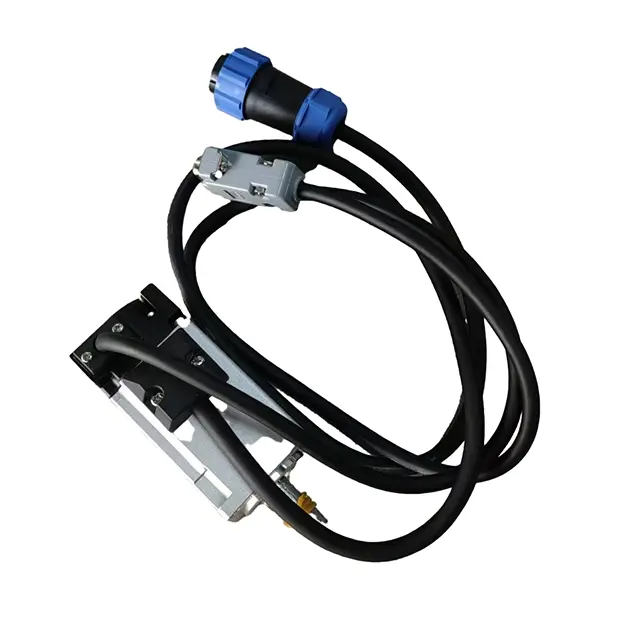
A: Not at all. These motors often follow standardized mounting interfaces and offer plug-and-play wiring harnesses for fast integration. Most models include documentation for easy mechanical and electrical setup.
Q2: How do I synchronize both shafts effectively?
A: The dual shaft design ensures simultaneous rotation. However, external gear ratios or linkage configurations must be accurately designed to maintain mechanical parity.
Q3: Are low voltage servo motors suitable for heavy-duty AGVs?
A: Absolutely. Thanks to advanced torque-density designs, modern low voltage servo motors can drive heavy payloads while maintaining compact dimensions and energy efficiency.
Q4: What’s the average lifespan of these motors in AGV applications?
A: With proper cooling and load handling, a quality low voltage servo motor can operate for over 20,000 hours, depending on the environment and usage.
Q5: Do I need a special controller?
A: While most low voltage servo motors are compatible with standard motion controllers, it’s advisable to use matched drivers to leverage all features such as PID tuning, encoder feedback, and programmable speed profiles.
Conclusion
In the race toward smarter, more efficient automation, dual output shaft low voltage servo motors stand out as a strategic solution. Their synergy of safety, compactness, efficiency, and bidirectional mechanical output is tailor-made for AGVs and robotics where every watt, millimeter, and millisecond counts.
Whether you're designing a lightweight AGV for material handling or engineering a robotic arm for intricate assembly tasks, choosing the right low voltage servo motor can dramatically boost your project’s success. By enabling symmetric operation, simplifying drive systems, and operating safely at low voltages, these motors are not just components—they’re enablers of next-generation automation.


