

Views: 0 Author: Site Editor Publish Time: 2025-07-16 Origin: Site


Efficient production is the backbone of competitive manufacturing, and often the secret lies hidden inside the mechanical transmission system. Among the many components driving industrial automation, the geared motor stands out as a key technology for maximizing operational efficiency. Combining precision engineering with intelligent control, geared motors offer significant performance advantages that can transform manufacturing lines. In this article, we explore how geared motors contribute to industrial efficiency, their core features, and the applications where they deliver the greatest value. Understanding these factors can help you make informed decisions when selecting drive solutions to meet your production demands.
At its core, a geared motor is an integrated mechanical device consisting of three major elements: a servo motor, a precision planetary gearbox, and an optimized control system. These three components are combined into one unit to provide seamless transmission of power, better speed control, and reliable torque output.
But what makes a geared motor truly different from a conventional motor?
A regular motor generates rotational energy, but it often operates at high speeds with limited torque. This is where the gearbox comes in. By reducing the speed, the gearbox increases the torque output, which is essential for driving heavy industrial loads. In geared motors, the gearbox is directly coupled with the motor, eliminating the need for external power transmission mechanisms like pulleys or belts. This integration enhances power delivery efficiency, saves space, and reduces potential mechanical failures.
Moreover, servo control systems in geared motors allow for precise motion adjustments, even under changing loads. These intelligent control algorithms make geared motors ideal for demanding tasks in automation, where timing and accuracy are non-negotiable.
The ability to combine all of this in a compact footprint makes geared motors a preferred solution in manufacturing industries seeking to minimize space while maximizing output.
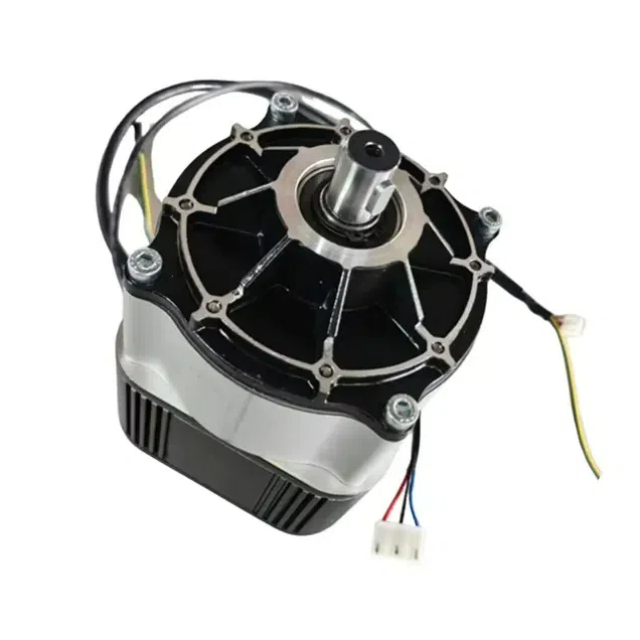
Energy efficiency is a top priority in industrial operations. Geared motors achieve this by optimizing how mechanical energy is transmitted. Inside the geared motor, high-precision gears reduce friction and mechanical losses during transmission. This ensures that a maximum portion of the motor’s power output is used effectively, rather than being lost as heat or vibration.
Traditional transmission systems like belts or chains often suffer from slippage and wear, which not only causes energy waste but also shortens equipment life. In contrast, the tightly meshed gears in a geared motor provide a more consistent and direct transmission path. As a result, machines operate more smoothly, with lower total power consumption over time.
Additionally, geared motors offer superior load adaptability. When facing variable loads or system disturbances, the built-in control systems dynamically adjust torque and speed to maintain performance, avoiding over-exertion and energy spikes. This smart responsiveness minimizes inefficiencies and reduces energy bills in the long run.
Modern production lines require flexibility — the ability to slow down, speed up, or stop at precise moments. Geared motors make this possible by delivering fine-tuned speed control across a wide range of operations.
Thanks to integrated servo control technology, geared motors can maintain consistent speeds even under fluctuating load conditions. For example, in a packaging line, where timing is crucial for sealing and labeling, geared motors ensure every movement is accurately timed. In contrast, ordinary motors may struggle to maintain stability, especially when the product load varies.
Better speed control also leads to better product consistency. Whether it’s in filling systems, conveyor belts, or robotic applications, every movement matters. A geared motor helps reduce production variability, which is critical for quality assurance and customer satisfaction.
Furthermore, by minimizing sudden starts and stops, geared motors reduce mechanical stress on connected equipment. This results in less wear and tear, longer equipment life, and lower maintenance costs.
Industrial floors are busy and space is expensive. That’s why one of the most appreciated benefits of geared motors is their high power density in a compact form. Unlike separate motor and gearbox setups, geared motors integrate both into a single housing. This integration minimizes installation space and simplifies system design.
Despite their small size, geared motors provide exceptional torque output, often outperforming larger systems that rely on external gear reducers or mechanical linkages. This makes them an excellent choice for machines that need to be both powerful and compact — such as robotic arms, pick-and-place devices, and compact automation modules.
Their smaller footprint also allows for greater design flexibility. Manufacturers can build more compact equipment layouts, optimize their workflows, and even expand their production capacity within existing space constraints. This level of scalability is invaluable for businesses aiming to grow without incurring large infrastructure costs.
Geared motors excel in a variety of applications where precision, reliability, and space optimization are essential. Some of the industries and systems where they provide the most value include:
Packaging Equipment: Geared motors ensure accurate positioning and timing during filling, sealing, cutting, and labeling processes.
Conveyor Systems: Consistent speed and torque help prevent product damage and system failures.
Robotic Arms: Fine-tuned motion and strong torque at low speeds enable robots to handle tasks like welding, assembly, and material handling with high repeatability.
Automated Assembly Lines: Coordinated movements across multiple stages of production demand precise motion control that geared motors are well-suited to deliver.
Take, for instance, an automated packaging facility. Before switching to geared motors, the equipment suffered frequent downtime due to inconsistent speed control and gear misalignments. After integrating geared motors, the system experienced smoother operation, fewer failures, and a noticeable increase in throughput.
When compared with traditional chain-and-belt systems, geared motors offer reduced maintenance, higher energy efficiency, and longer lifespan. Over time, these benefits translate to lower total cost of ownership and a faster return on investment.
To make the most of your investment in geared motors, it's essential to understand the key performance metrics that matter:
Torque Output: Determines the motor’s ability to drive various loads without stalling or overheating.
Gear Ratio: Affects how much speed is reduced and torque is increased. Choosing the right ratio is crucial for optimal performance.
Efficiency Rating: A higher rating indicates better energy conversion and lower power loss.
Response Time: Reflects how quickly the motor responds to control inputs, critical for high-speed or complex automation tasks.
Evaluating these parameters allows businesses to select geared motors that are perfectly aligned with their performance goals and application environments.
At Shenzhen Tiger Motion Control Technology Co., Ltd., our servo geared motors undergo rigorous testing and optimization to ensure they meet industry-specific requirements and deliver consistently high performance in real-world scenarios.
In the ever-evolving landscape of industrial automation, geared motors have proven themselves to be a cornerstone technology. With their ability to combine high torque, precise control, and compact form, they offer unparalleled advantages in boosting productivity and reducing costs. Whether you're looking to upgrade an outdated drive system or enhance a new production line, choosing the right geared motor solution can deliver transformative results.
Shenzhen Tiger Motion Control Technology Co., Ltd. offers a wide range of servo geared motors, combining in-house R&D, intelligent manufacturing, and customizable configurations to meet the most demanding industrial challenges. Contact us today to learn how our geared motor solutions can help your operations run faster, smarter, and more efficiently.


