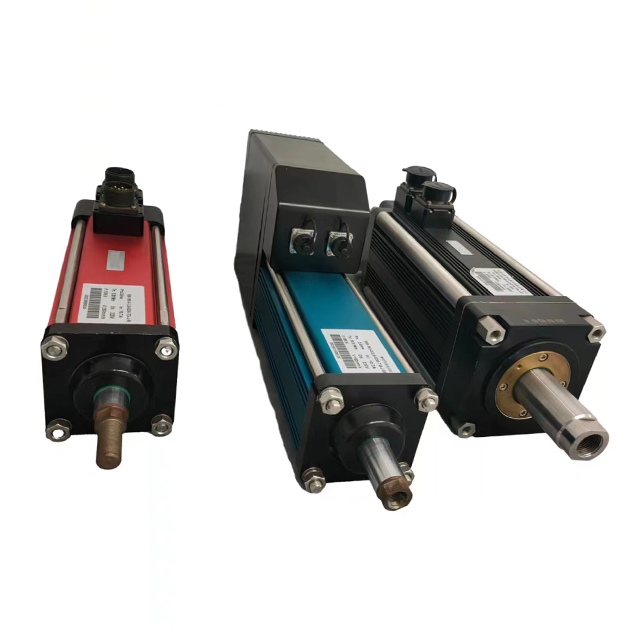
Are you curious about the latest advancements in automation technology? Servo electric cylinders are revolutionizing how industries operate. In this article, we’ll delve into their definition, importance in modern automation, and various applications. You’ll learn how they compare to traditional electric actuators and why they are becoming the preferred choice for precision tasks.
Table of Contents
Toggle
Differences Between Electric Actuators and Servo Electric Cylinders
Basic Functionality Comparison
Electric actuators and servo electric cylinders serve similar purposes in automation but differ significantly in functionality. An electric actuator is primarily a simple device that converts electrical energy into linear motion. It operates on a straightforward on/off basis, akin to an electric motor. When power is supplied, it extends or retracts until it reaches a limit switch, which stops the motion. This makes electric actuators ideal for applications requiring a fixed range of motion without the need for precise positioning.
In contrast, servo electric cylinders are more advanced. They can receive commands to move to specific positions, allowing for precise control over both position and speed. This capability makes servo electric cylinders suitable for complex applications where accuracy is crucial, such as in robotics or automated manufacturing processes.
Control Mechanisms: Open-loop vs Closed-loop
The control mechanisms of electric actuators and servo electric cylinders further highlight their differences. Electric actuators typically operate in an open-loop control system. This means they do not receive feedback about their position or speed. They simply respond to the power supplied, making them less suitable for applications requiring high precision.
On the other hand, servo electric cylinders utilize a closed-loop control system. They incorporate feedback devices, such as encoders, that provide real-time data on the cylinder's position and speed. This feedback allows for adjustments during operation, ensuring high precision and repeatability. Consequently, servo electric cylinders can adapt to varying loads and conditions, making them more versatile than electric actuators.
Efficiency and Performance Metrics
Efficiency is another critical point of differentiation. Electric actuators generally consume energy only when in motion, but they may not be as efficient in terms of energy usage compared to servo systems. Their simple design may lead to higher energy consumption during idle periods, especially if they are oversized for the application.
In contrast, servo electric cylinders are designed for efficiency. They consume energy only when performing work and can adjust their power consumption based on the load and required speed. This results in lower overall energy use and reduced operational costs. Performance metrics for servo electric cylinders often include higher speed capabilities, greater force output, and improved accuracy compared to standard electric actuators.
In summary, while both electric actuators and servo electric cylinders are essential components in automation, their differences in functionality, control mechanisms, and efficiency make them suitable for different applications. Electric actuators are best for simple, repetitive tasks, while servo electric cylinders excel in precision-driven environments requiring adaptability and high performance.
Tip: When selecting between electric actuators and servo electric cylinders, consider the specific application requirements, such as precision, speed, and energy efficiency, to ensure optimal performance.
Advantages of Using Servo Electric Cylinders
High Precision and Speed
Servo electric cylinders are renowned for their high precision and speed. Unlike traditional electric actuators, which may struggle with accuracy, servo electric cylinders can achieve micrometer-level precision. This is primarily due to their closed-loop control system, which uses feedback from sensors to continuously monitor and adjust the position and speed of the cylinder. This capability is essential in applications where precision is critical, such as in robotics, CNC machining, and automated assembly lines.
The speed of servo electric cylinders is another significant advantage. They can operate at high speeds, often reaching up to 2 meters per second, depending on the application. This rapid response time is crucial in fast-paced environments, allowing for increased productivity and efficiency. For instance, in a manufacturing setting, faster cycle times can lead to higher output without compromising quality.
Reduced Energy Consumption
Energy efficiency is a growing concern in today's industrial landscape. Servo electric cylinders excel in this area as they consume power only when performing work. In contrast, traditional electric actuators may draw power continuously, even when not in use. This can lead to increased energy costs over time.
By utilizing advanced control algorithms, servo electric cylinders can dynamically adjust their energy consumption based on the load and required speed. This not only reduces energy waste but also contributes to lower operational costs. Additionally, many servo systems incorporate regenerative braking, which allows them to recover energy during deceleration, further enhancing their energy efficiency.
Lower Maintenance Requirements
Maintenance is a critical factor in the longevity and reliability of any mechanical system. Servo electric cylinders are designed with fewer moving parts compared to hydraulic or pneumatic systems, resulting in lower maintenance needs. The absence of fluids in servo systems eliminates issues related to leaks and fluid degradation, which are common in hydraulic systems.
Moreover, the use of brushless DC motors in many servo electric cylinders means less wear and tear, as there are no brushes to replace. Regular maintenance often involves simple tasks, such as lubrication, which can be done infrequently. This ease of maintenance translates to less downtime and reduced operational costs, making servo electric cylinders a more attractive option for businesses looking to streamline operations.
In summary, the advantages of using servo electric cylinders include their high precision and speed, reduced energy consumption, and lower maintenance requirements. These features make them an ideal choice for various applications, from industrial automation to robotics, where efficiency and reliability are paramount.
Tip: When selecting a servo electric cylinder, consider the specific precision and speed requirements of your application to ensure optimal performance and energy efficiency.
Applications of Servo Electric Cylinders
Industrial Automation
Servo electric cylinders are increasingly becoming integral to industrial automation. They offer precise control over motion, which is essential in manufacturing environments. These cylinders can handle repetitive tasks such as assembly, packaging, and material handling with high accuracy. For instance, in a conveyor system, servo electric cylinders can precisely position items at various stages, ensuring smooth operations and reducing the risk of errors. Their ability to adjust speed and force dynamically allows for flexibility in production lines, accommodating different product sizes and weights without the need for extensive mechanical changes.
Robotics and Machine Building
In robotics, servo electric cylinders play a crucial role in enhancing the capabilities of robotic arms and automated systems. They provide the necessary precision for tasks like welding, painting, and assembly. For example, a robotic arm equipped with servo electric cylinders can perform intricate movements required for delicate assembly tasks, ensuring high-quality results. The closed-loop control system of these cylinders allows robots to adapt to varying loads and conditions, making them ideal for complex applications in machine building. This adaptability is particularly useful in industries like automotive and aerospace, where precision and reliability are paramount.
Medical Equipment and Aerospace
The medical field also benefits significantly from servo electric cylinders. They are used in devices such as surgical robots, prosthetics, and diagnostic machines, where precision and reliability are critical. For instance, in surgical applications, servo electric cylinders can provide the exact movements needed for minimally invasive procedures, enhancing the surgeon's ability to operate with precision. Similarly, in aerospace, these cylinders are utilized in systems requiring accurate control of surfaces and mechanisms, such as landing gear and wing flaps. The ability to operate efficiently and with minimal maintenance makes servo electric cylinders a preferred choice in these high-stakes environments.
In summary, the applications of servo electric cylinders span various industries, including industrial automation, robotics, medical equipment, and aerospace. Their precision, adaptability, and efficiency make them essential components in modern engineering solutions.
Tip: When integrating servo electric cylinders into your systems, consider the specific requirements of your application, such as load capacity and precision, to maximize performance and efficiency.
Choosing Between Servo Electric Cylinders and Other Actuators
Factors to Consider
When selecting between servo electric cylinders and other actuators, several factors come into play. First, consider the application requirements. If your project demands high precision and speed, servo electric cylinders are the preferred choice. Their ability to achieve micrometer-level accuracy makes them ideal for applications in robotics, CNC machining, and automated assembly lines. Conversely, if your application involves simpler tasks with fixed motion ranges, traditional electric actuators might suffice.
Additionally, evaluate the load capacity needed for your application. Servo electric cylinders can handle varying loads due to their closed-loop control systems, which adjust performance based on real-time feedback. On the other hand, electric actuators may struggle with dynamic loads, making them less suitable for applications requiring adaptability.
Cost-Effectiveness Analysis
Cost is a critical consideration when deciding between servo electric cylinders and other actuators. While servo systems often have a higher upfront cost due to their advanced technology and components, they can lead to long-term savings. Their efficiency in energy consumption reduces operational costs, especially in high-duty-cycle applications. Moreover, the lower maintenance requirements of servo electric cylinders can further enhance their cost-effectiveness over time.
In contrast, traditional electric actuators are typically less expensive upfront. However, their higher energy consumption and potential for increased maintenance needs can offset initial savings. Therefore, it’s essential to conduct a thorough cost-benefit analysis based on your specific application requirements and operational goals.
Performance Needs and Specifications
Performance needs play a significant role in actuator selection. Servo electric cylinders excel in applications requiring precise control over position, speed, and force. They are equipped with feedback mechanisms, allowing for real-time adjustments and ensuring repeatability. This is particularly crucial in industries like aerospace and medical equipment, where precision is non-negotiable.
On the other hand, electric actuators may be suitable for less demanding applications that do not require intricate control. They operate effectively in open-loop systems where feedback is not critical. However, this simplicity can come at the cost of precision and adaptability, making them less versatile than servo electric cylinders.
In summary, when choosing between servo electric cylinders and other actuators, consider factors such as application requirements, cost-effectiveness, and performance specifications. Understanding these elements will help you make an informed decision that aligns with your project's goals.
Tip: Always assess the specific needs of your application, such as precision, load capacity, and operational costs, to determine the most suitable actuator type for optimal performance.
Future Trends in Servo Electric Cylinder Technology
Advancements in Control Systems
The future of servo electric cylinders is closely tied to advancements in control systems. As technology evolves, we see the integration of more sophisticated algorithms that enhance the precision and responsiveness of these systems. For instance, predictive control techniques are being developed, allowing servo electric cylinders to anticipate load changes and adjust their performance proactively. This leads to smoother operation and improved accuracy, which is vital in applications like robotics and automated manufacturing. Additionally, machine learning algorithms are being explored to optimize control strategies based on real-time data, enabling even greater adaptability and efficiency.
Integration with IoT and Smart Manufacturing
The Internet of Things (IoT) is transforming various industries, and servo electric cylinders are no exception. Future trends indicate a significant shift towards the integration of these cylinders with IoT platforms, allowing for real-time monitoring and data analysis. This connectivity enables manufacturers to gather insights on performance, predict maintenance needs, and enhance overall operational efficiency. For example, sensors embedded in servo electric cylinders can send data regarding their performance to a centralized system, which can then analyze this information to optimize workflows and reduce downtime. This integration supports smart manufacturing initiatives, where interconnected systems work together seamlessly to improve productivity.
Sustainability and Energy Efficiency Improvements
Sustainability is becoming a priority in engineering and manufacturing. Servo electric cylinders are well-positioned to contribute to these efforts due to their inherent energy efficiency. Future developments are expected to focus on further reducing energy consumption through innovative designs and materials. For instance, advancements in motor technology, such as the use of more efficient brushless DC motors, can minimize energy loss during operation. Additionally, regenerative braking systems are being refined, allowing servo electric cylinders to recover energy during deceleration, which can then be reused in the system. This not only reduces energy costs but also aligns with global sustainability goals, making servo electric cylinders an attractive option for eco-conscious manufacturers.
Tip: As you consider implementing servo electric cylinders, stay informed about advancements in control systems and IoT integration to maximize efficiency and adaptability in your applications.
Common Misconceptions About Servo Electric Cylinders
Understanding the Terminology
One common misconception in the world of automation is the interchangeable use of terms like "servo electric cylinder," "electric actuator," and "linear actuator." While these terms may seem similar, they refer to distinct technologies with different functionalities. An electric actuator is a broad term that encompasses devices converting electrical energy into motion, which can be either linear or rotary. In contrast, a servo electric cylinder specifically refers to a type of electric actuator that combines precision control with the ability to receive commands for specific positions. Understanding these terminologies is crucial for selecting the right technology for your application.
Comparing with Hydraulic Systems
Another misconception involves comparing servo electric cylinders to hydraulic systems. Many people believe that hydraulic systems are the only option for high-force applications. However, servo electric cylinders can provide comparable force capabilities without the drawbacks associated with hydraulics, such as fluid leaks and complex maintenance. Servo electric cylinders operate using electrical energy, which eliminates the need for hydraulic fluids, making them cleaner and more environmentally friendly. Furthermore, they offer superior precision and control, which is often lacking in hydraulic systems, especially in applications requiring delicate movements.
Addressing Performance Myths
There are also myths surrounding the performance of servo electric cylinders. Some believe that they cannot match the speed and force of hydraulic systems. This is not true; modern servo electric cylinders can achieve high speeds—often exceeding 2 meters per second—and can generate significant force outputs. The closed-loop control systems used in these cylinders allow for real-time adjustments based on feedback, ensuring consistent performance even under varying loads. Thus, servo electric cylinders are not only competitive but often superior in precision and efficiency compared to traditional hydraulic systems.
Tip: When considering servo electric cylinders, clarify the terminology and performance expectations to ensure you choose the best solution for your specific application needs.
Conclusion
Electric actuators and servo electric cylinders serve different automation needs. Electric actuators are simple devices for basic motion, while servo electric cylinders offer precise control and adaptability. The closed-loop systems in servo cylinders provide real-time feedback, enhancing performance and efficiency. When choosing between them, consider application requirements and cost-effectiveness. For advanced solutions, Shenzhen Tiger Motion Control Technology offers high-quality servo electric cylinders, ensuring reliability and precision for various industries. Their products deliver exceptional value, enhancing operational efficiency.
Tiger Motion also provides OEM and ODM customization services to meet different application requirements. With professional engineering support and flexible solutions, we help customers develop customized servo electric cylinders. Our products comply with international export standards and are available with certifications such as CE and RoHS, ensuring reliable quality for global markets.
FAQ
Q: What is a Servo Electric Cylinder?
A: A Servo Electric Cylinder is a type of actuator that provides precise control over position and speed, utilizing a closed-loop control system for enhanced accuracy in applications.
Q: How do Servo Electric Cylinders compare to electric actuators?
A: Servo Electric Cylinders offer higher precision and adaptability compared to electric actuators, which typically operate on a simple on/off mechanism without feedback.
Q: Why choose a Servo Electric Cylinder for automation?
A: Choosing a Servo Electric Cylinder ensures high precision, reduced energy consumption, and lower maintenance requirements, making it ideal for demanding applications.
Q: What are the typical applications of Servo Electric Cylinders?
A: Servo Electric Cylinders are commonly used in industrial automation, robotics, medical equipment, and aerospace applications due to their precision and efficiency.
Q: What is the cost difference between Servo Electric Cylinders and electric actuators?
A: Servo Electric Cylinders generally have a higher upfront cost but can lead to long-term savings due to their energy efficiency and lower maintenance needs.