How do industrial robots achieve such precise movements? The answer lies in advanced motion control solutions. Servo motors play a vital role in enabling accuracy and efficiency.
Motion control systems solve challenges like synchronization and real-time feedback in robotics. They ensure smooth, reliable operations in complex tasks.
In this post, you’ll learn about servo motors’ importance, key components of motion control, and how these systems enhance industrial robot performance.
Key Components of Servo Motor-Based Motion Control Systems
Servo motors: types and selection criteria
Servo motors are the heart of motion control solutions in industrial robots. They come in various types, including brushless servo motors and industrial servo motors with integrated encoders. Brushless servo motors are preferred for their high efficiency, low maintenance, and longer lifespan. When selecting a servo motor, factors like torque, speed, size, and environmental conditions matter. For example, a servo motor in CNC machines demands high precision and repeatability, often achieved with a servo motor with encoder feedback. Industrial applications might require rugged servo actuators that withstand harsh conditions.
Role of motion controllers in industrial robots
The servo motor controller industrial systems act as the brain of the motion control architecture. They interpret commands from the robot’s central processor and translate them into precise motor movements. These controllers manage position, velocity, and torque by continuously processing feedback signals. Advanced servo motor controllers can coordinate multiple axes, enabling complex robotic motions. They often support industrial communication protocols like EtherCAT or PROFINET, ensuring seamless integration with other automation components.
Drive and amplifier functions for servo motor operation
Servo drives or amplifiers serve as the muscle, converting low-voltage control signals into high-power electrical currents that drive the servo motors. These drives regulate voltage and current to maintain desired motor speed and torque. Modern servo drives offer features like regenerative braking and thermal protection to enhance efficiency and reliability. Multi-axis servo drives can control several servo motors simultaneously, simplifying wiring and reducing system complexity.
Sensor integration for feedback and accuracy
Sensors are essential for closed-loop control, providing real-time feedback on motor position, speed, and torque. Encoders, particularly absolute and incremental types, are commonly integrated with servo motors to deliver precise positional data. Torque sensors and force sensors further refine control by monitoring load conditions. This feedback allows the servo motor controller to adjust commands dynamically, ensuring smooth, accurate motion and compensating for disturbances or load changes.
Tip: When designing motion control solutions for industrial robots, prioritize servo motors with integrated encoders and compatible servo drives to achieve optimal precision and system responsiveness.
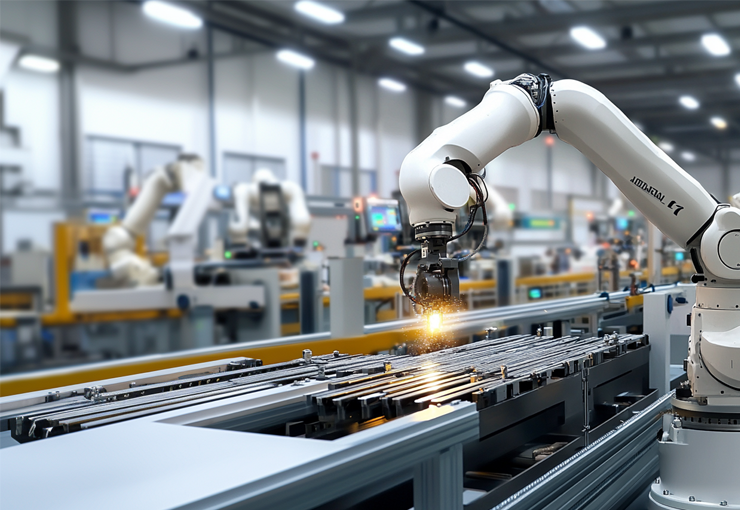
Designing Effective Motion Control Architectures with Servo Motors
Single-axis vs multi-axis servo motor control
When designing motion control solutions for industrial robots, one key decision is choosing between single-axis and multi-axis servo motor control. Single-axis control manages one servo motor independently, ideal for simple tasks like linear actuators or conveyor positioning. Multi-axis control, on the other hand, coordinates multiple servo motors simultaneously. This approach is essential for complex robots requiring synchronized movements across joints or axes, such as articulated arms.Multi-axis servo motor control systems use advanced servo motor controllers industrial-grade to ensure precise timing and coordination. They often rely on servo drives capable of handling multiple motors, reducing wiring complexity and enhancing system compactness. Coordinated control improves motion smoothness, reduces vibration, and enables intricate path following.
Closed-loop control systems for enhanced precision
Closed-loop control is fundamental for achieving high precision and repeatability in industrial servo motor applications. It continuously monitors feedback from sensors like encoders integrated within the servo motor with encoder and adjusts commands accordingly. This feedback loop maintains accurate position, velocity, and torque, compensating for load variations and disturbances.Servo motors and drives form the backbone of closed-loop systems. The servo motor receives power modulated by the servo drive, which itself is directed by the servo motor controller processing real-time feedback. This architecture ensures the robot performs smooth, accurate movements essential in CNC machining, assembly, and other precision tasks.
Integration of servo motors with industrial communication protocols
Modern motion control architectures integrate servo motors and controllers with industrial communication protocols such as EtherCAT, PROFINET, and CANopen. These protocols enable real-time data exchange, multi-axis synchronization, and remote diagnostics.Using standardized communication facilitates interoperability between servo actuators, drives, and controllers from different manufacturers. It also supports scalability, allowing systems to expand with additional axes or subsystems without redesign. This integration is crucial for Industry 4.0 environments where data-driven optimization and predictive maintenance rely on seamless connectivity.
Optimizing servo motor performance for speed and torque
Optimizing servo motor performance involves balancing speed, torque, and precision requirements. Selecting an appropriate industrial servo motor depends on the application's dynamic load, acceleration, and duty cycle.Servo drives play a vital role by providing current control to meet torque demands while maintaining speed profiles. Advanced algorithms in servo motor controllers adjust acceleration ramps to prevent mechanical stress and reduce overshoot. For example, brushless servo motors offer high torque-to-inertia ratios, enabling rapid acceleration and deceleration with minimal delay.
Energy efficiency considerations in servo motor systems
Energy efficiency is increasingly important in industrial robot design. Efficient servo motor systems reduce operational costs and heat generation.Brushless servo motors excel in efficiency due to reduced friction and absence of brushes. Servo drives with regenerative braking can recover energy during deceleration phases, feeding it back into the power system. Intelligent power management algorithms further optimize energy use by adjusting motor torque based on load conditions.
Thermal management and space constraints in motor design
Thermal management is critical to maintaining servo motor reliability and performance. Excess heat can degrade motor windings, sensors, and electronics.Designers must consider ambient conditions and enclosure ventilation. Compact servo actuators may require integrated heat sinks or liquid cooling for high-power applications. Space constraints often dictate motor size and cooling solutions, especially in compact industrial robots or CNC machines.
Safety and fault-tolerant features in servo motor control
Safety is paramount in industrial robot motion control. Servo motor controllers industrial systems incorporate fault detection, emergency stop functions, and safe torque-off capabilities.Advanced architectures include redundant sensors and communication paths to detect failures promptly. Fault-tolerant designs ensure the robot can enter a safe state without sudden stops that could endanger operators or damage equipment. Compliance with safety standards like ISO 13849 guides these implementations.
Tip: When designing motion control architectures, prioritize closed-loop multi-axis servo motor control with integrated industrial communication protocols to achieve precise, efficient, and safe robot operation.
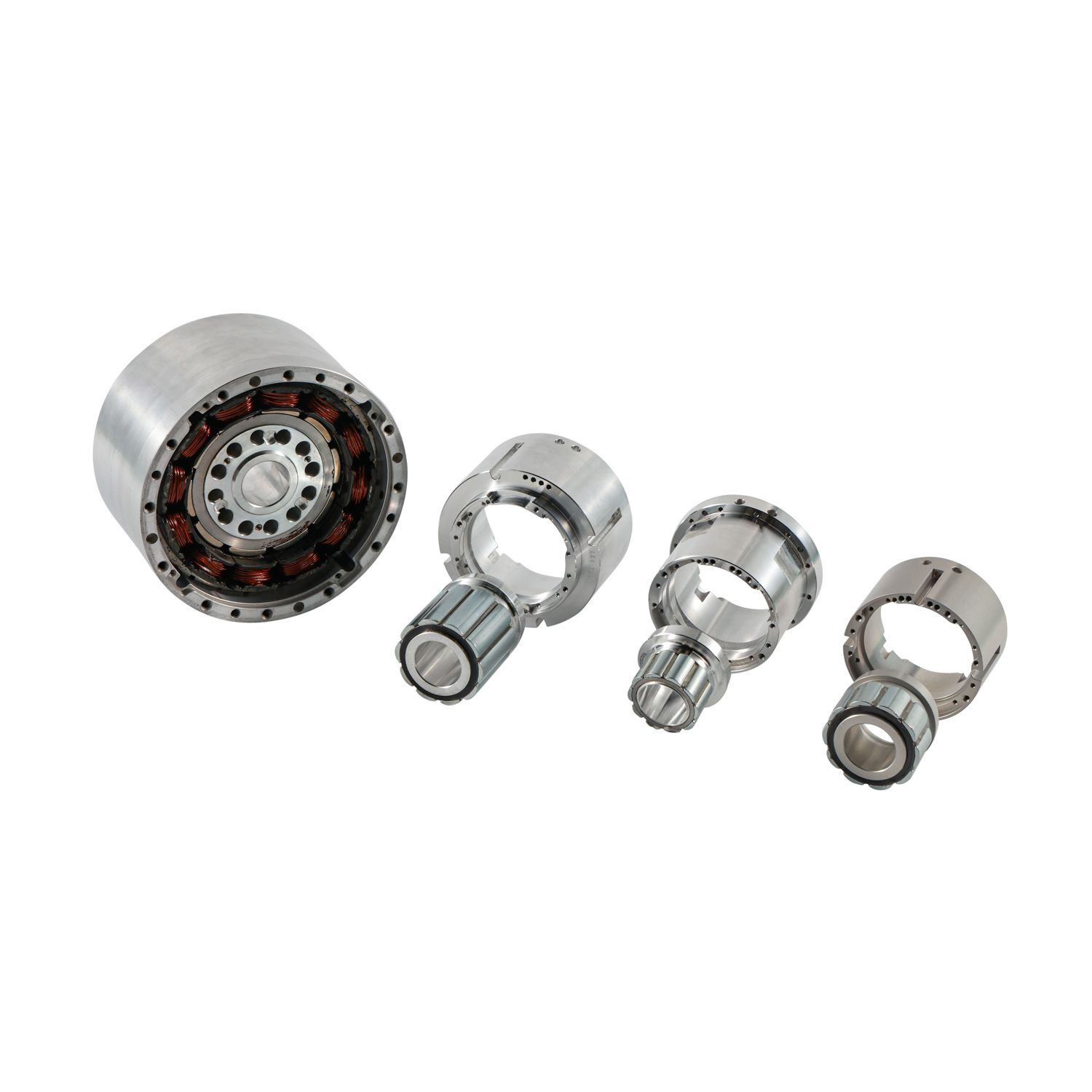
Comparing Servo Motors with Other Motor Types in Industrial Robots
Advantages of servo motors over stepper motors
Servo motors stand out in industrial robot motion control due to their precision, speed, and torque capabilities. Unlike stepper motors, which operate in fixed steps without feedback, servo motors use feedback systems such as encoders to continuously adjust their position. This closed-loop control ensures higher accuracy and smoother motion, essential for complex robotic tasks.Stepper motors are simpler and cost-effective for basic, low-speed applications. However, they may lose steps under heavy load, leading to positioning errors. Servo motors maintain consistent torque across a wide speed range, making them suitable for demanding industrial environments where reliability and precision are critical.
Use cases for AC synchronous and asynchronous motors
AC synchronous motors synchronize rotor speed with the supply frequency, providing precise speed control and high efficiency. They are often used in robotics applications requiring constant speed and position accuracy, such as conveyor systems or pick-and-place robots.AC asynchronous motors, or induction motors, are robust and cost-effective. They excel in applications like pumps or fans where variable speed control is less critical. While they offer durability, their use in high-precision motion control is limited compared to servo motors.
Brushed vs brushless DC motors in motion control
Brushed DC motors are simple and inexpensive but require regular maintenance due to brush wear. They are suitable for applications where cost is a priority over longevity.Brushless servo motors, on the other hand, offer higher efficiency, longer life, and reduced maintenance. They use electronic commutation, which improves precision and allows integration with servo motor controllers for real-time feedback and control. This makes brushless servo motors ideal for industrial robots demanding high performance.
Application-driven motor selection strategies
Choosing the right motor depends on the specific industrial robot application:
High precision and dynamic response: Brushless servo motors with encoders and advanced servo drives are preferred.
Cost-sensitive, simple positioning: Stepper motors may suffice for point-to-point motion without complex feedback.
Constant speed, moderate precision: AC synchronous motors fit well.
Heavy-duty, less precise tasks: AC asynchronous motors or brushed DC motors can be considered.
Integrating the motor with compatible servo motor controllers industrial systems and drives ensures optimal performance. Considering factors like load, speed, torque, environmental conditions, and system complexity helps tailor the motion control solution effectively.
Tip: Prioritize servo motors with integrated encoders and brushless designs for industrial robots requiring high precision, speed, and reliability over stepper or brushed motor alternatives.
Advanced Motion Control Algorithms and Software for Servo Motor Systems
Adaptive and intelligent control algorithms
Adaptive control algorithms play a crucial role in modern motion control solutions for industrial robots. These algorithms continuously monitor the servo motor's performance and adjust control parameters in real-time. For instance, if load conditions change or mechanical wear occurs, the system adapts to maintain precise positioning and smooth movement. Intelligent control techniques, such as fuzzy logic or neural networks, further enhance this adaptability by handling nonlinearities and uncertainties in servo actuators. This results in improved accuracy, reduced overshoot, and faster settling times, which are essential for high-performance industrial servo motor applications.
Machine learning integration for motion optimization
Machine learning (ML) is increasingly integrated into servo motor controller industrial systems to optimize motion control. By analyzing historical motion data and sensor feedback, ML algorithms can predict and compensate for disturbances or mechanical deviations. This predictive capability enables the servo drive to fine-tune torque and speed profiles dynamically, enhancing efficiency and reducing energy consumption. Over time, the system "learns" the best control strategies for specific tasks, improving throughput and minimizing wear on servo motors and drives. This approach is especially beneficial in complex multi-axis systems where coordinated motion is critical.
Real-time trajectory planning and error compensation
Real-time trajectory planning software enables industrial robots to execute complex paths smoothly and accurately. The servo motor controller calculates optimal motion trajectories considering speed, acceleration, and torque limits. It continuously compares the actual position from the servo motor with encoder feedback against the desired path. Any deviation triggers immediate error compensation, adjusting motor commands to correct position or velocity errors. This closed-loop process ensures precision in applications like CNC machining or precision assembly, where even minor errors can affect product quality.
Simulation and digital twin technologies for system design
Simulation tools and digital twin technologies have become indispensable in designing motion control solutions with servo motors. A digital twin is a virtual replica of the physical robot system, including servo motors, drives, and controllers. Engineers use simulations to test control algorithms, predict system behavior under various conditions, and identify potential issues before deployment. This reduces development time and costs while improving reliability. Digital twins also support ongoing optimization by providing real-time performance data that feeds back into adaptive control algorithms, ensuring continuous improvement in servo motor system performance.
Tip: Leverage adaptive algorithms and machine learning in servo motor controllers to achieve smarter, more efficient motion control with real-time error correction and predictive optimization.
Applications of Servo Motor Motion Control in Industrial Robotics
Precision assembly and manufacturing automation
Servo motors are essential in precision assembly tasks, where exact positioning and smooth motion are critical. Industrial servo motors with integrated encoders enable robotic arms to place components accurately on circuit boards or assemble delicate parts. The servo motor controller processes real-time feedback to adjust movements instantly, minimizing errors and ensuring consistent quality. Automation lines benefit from servo drives that regulate torque and speed precisely, reducing cycle times and boosting throughput.
Robotic welding, painting, and material handling
In welding and painting, servo motors provide the controlled motion needed for uniform application and consistent weld seams. Brushless servo motors offer high torque and speed control, allowing robots to follow complex paths with minimal vibration. For material handling, servo actuators move heavy loads smoothly and safely, adapting motion profiles to varying weights. Servo motor controllers industrial-grade ensure synchronization across multiple axes, crucial for coordinated robotic tasks in manufacturing environments.
Surgical and medical robotics requiring high accuracy
Medical robots demand ultra-precise motion control to perform minimally invasive surgeries. Servo motors with encoders deliver the fine positional feedback necessary for delicate instrument manipulation. Advanced motion control solutions integrate servo drives with adaptive algorithms, compensating for patient movement and ensuring safe operation. These systems enhance surgeon capabilities, improving outcomes through stable, repeatable motions.
Autonomous vehicles and collaborative robots
Servo motor motion control underpins the agility and responsiveness of autonomous vehicles and collaborative robots (cobots). Multi-axis servo motor control architectures enable smooth, coordinated movements essential for navigating dynamic environments. Safety features embedded in servo motor controllers detect unexpected forces and trigger fault-tolerant responses. Integration with industrial communication protocols allows real-time data exchange, supporting advanced navigation and human-robot interaction.
Case studies demonstrating servo motor benefits
Automotive assembly: Manufacturers use servo motors to synchronize robotic welding and painting, achieving high precision and reducing defects.
Medical robotics: The da Vinci Surgical System employs servo motor controllers for precise instrument control, enhancing surgical accuracy.
Logistics automation: Warehouses deploy servo-driven robots for material handling, improving speed and reducing manual labor injuries.
Tip: To maximize robotic application performance, select servo motors and drives tailored to task precision, speed, and load requirements, ensuring seamless integration with advanced controllers and feedback sensors.
Implementation Best Practices for Servo Motor Motion Control Solutions
Assessing project requirements and environment
Before selecting motion control solutions, thoroughly assess your project’s specific needs. Identify the tasks the industrial robot will perform and the precision required. Consider environmental factors such as temperature, humidity, dust, and vibration levels, which affect servo motor choice. For example, a servo motor in CNC machining demands high precision and stable thermal conditions, while robots in harsh environments need rugged industrial servo motors with appropriate IP ratings. Understanding these parameters guides the selection of servo motors and controllers that will deliver reliable performance and longevity.
Selecting compatible components and controllers
Choosing compatible components is critical to system success. Match the servo motor with an appropriate servo drive and servo motor controller industrial-grade to ensure seamless communication and control. For instance, brushless servo motors require drives capable of electronic commutation and precise current regulation. Additionally, ensure the servo motor controller supports the necessary industrial communication protocols like EtherCAT or PROFINET, enabling integration with other automation systems. Using servo motors with encoders enhances feedback accuracy, which the controller must process efficiently for closed-loop control.
System integration and rigorous testing procedures
Integrate all components carefully, including servo actuators, drives, controllers, and sensors. Proper wiring, shielding, and grounding prevent electrical noise that can disrupt feedback signals. Implement multi-axis coordination if your robot requires synchronized movements. After integration, conduct comprehensive testing under real operational conditions. Test for positioning accuracy, repeatability, and response times. Simulate fault conditions to verify safety features like emergency stop and safe torque-off. Document test results to identify areas needing adjustment before full deployment.
Ongoing monitoring, maintenance, and calibration
Once operational, continuously monitor servo motor and drive performance using built-in diagnostics and external sensors. Regularly check for signs of wear, overheating, or unusual vibrations. Scheduled maintenance, including cleaning and lubrication of mechanical parts, extends system life. Periodically recalibrate servo motors with encoder feedback to maintain precision, especially after mechanical changes or repairs. Employ software tools for remote monitoring to anticipate failures and optimize performance through predictive maintenance.
Training and support for operational excellence
Provide comprehensive training for operators and maintenance personnel on the servo motor system’s functions, safety protocols, and troubleshooting. Well-trained staff can identify and resolve issues quickly, minimizing downtime. Establish support agreements with component suppliers for expert assistance and firmware updates. Encourage ongoing education to keep pace with advancements in servo motor controllers and motion control algorithms, ensuring your system remains efficient and competitive.
Tip: Prioritize a holistic approach by thoroughly assessing requirements, selecting compatible servo motor components, and implementing rigorous testing and maintenance for reliable, high-performance industrial robot motion control solutions.
Future Trends in Servo Motor Motion Control for Industrial Robots
Impact of AI and machine learning on servo control
Artificial intelligence (AI) and machine learning (ML) are transforming servo motor control in industrial robots. These technologies enable servo motor controllers to learn from operational data, improving motion accuracy and efficiency over time. By analyzing patterns in servo motors and drives, AI can predict load changes, optimize torque output, and reduce overshoot or vibration. This intelligent adaptation enhances precision in complex tasks, such as assembly or CNC machining, where consistent performance is critical. Moreover, ML algorithms help identify early signs of wear or faults, enabling predictive maintenance that minimizes downtime.
IIoT-enabled remote monitoring and analytics
The Industrial Internet of Things (IIoT) is revolutionizing how servo motor systems are monitored and managed. IIoT-enabled servo drives and controllers connect to cloud platforms, allowing real-time remote monitoring of performance metrics like temperature, vibration, and current. This connectivity supports advanced analytics, which can detect anomalies and optimize energy consumption. For example, factories can track servo motor health across multiple robots, scheduling maintenance only when necessary. This reduces operational costs and extends the life of industrial servo motors. Additionally, IIoT integration facilitates quick troubleshooting and firmware updates, enhancing system responsiveness.
Miniaturization and integration of servo components
Advances in materials and manufacturing have led to smaller, more integrated servo motor components. Miniaturized brushless servo motors now fit into compact industrial robots without sacrificing power or precision. Integrated servo motor with encoder assemblies reduce wiring complexity and improve feedback accuracy. Combining servo actuators, drives, and controllers into compact modules saves space and simplifies system design. This trend supports the development of lightweight, agile robots for applications like medical devices or micro-assembly, where space is limited but high performance is essential.
Industry 4.0 and smart factory integration
Industry 4.0 drives the adoption of smart factories where servo motor motion control systems play a pivotal role. Connected servo motor controllers industrial-grade enable seamless communication between robots, sensors, and manufacturing execution systems. This integration allows for dynamic adjustment of motion profiles based on real-time production data. Robots can autonomously switch tasks, optimize energy use, and coordinate with other machines to maximize throughput. Digital twin technology creates virtual models of servo motor systems, allowing engineers to simulate and optimize performance before physical deployment. These innovations enhance flexibility, reduce waste, and improve product quality.
Advancements in sensor technology for feedback precision
Sensor technology continues to advance, improving the feedback precision of servo motor systems. High-resolution encoders and absolute position sensors provide detailed real-time data on motor shaft position, speed, and torque. Enhanced torque and force sensors enable more nuanced control, especially in collaborative robots where safety and adaptability are crucial. New sensor materials and designs offer greater durability and resistance to harsh industrial environments. These improvements allow servo motor controllers to execute smoother, more accurate motions and better compensate for external disturbances or mechanical wear.
Tip: Embrace AI-driven servo motor controllers and IIoT connectivity to enhance predictive maintenance, optimize performance, and enable smarter, more efficient industrial robot motion control systems.
Conclusion
Maximizing industrial robot performance requires precise servo motor solutions and thoughtful design. Key benefits include enhanced accuracy, efficient multi-axis control, and reliable closed-loop feedback. Staying current with AI, IIoT, and advanced sensors ensures smarter, energy-efficient operations. Strategic partnerships and thorough training support successful deployment and maintenance. Shenzhen Tiger offers innovative servo motor products that deliver high precision and seamless integration, empowering industries to optimize robotic motion control with confidence and ease.
FAQ
Q: What is the role of a servo motor in motion control solutions for industrial robots?
A: A servo motor is the core component in motion control solutions for industrial robots, providing precise position, speed, and torque control. Industrial servo motors, especially brushless types with integrated encoders, enable accurate closed-loop feedback essential for smooth and repeatable robotic movements.
Q: How does a servo motor controller industrial system enhance robot performance?
A: Servo motor controllers interpret commands and process feedback from servo motors and drives to regulate motion accurately. They coordinate multi-axis movements, manage torque and speed, and support protocols like EtherCAT, ensuring efficient and synchronized operation in complex industrial robots.
Q: Why choose brushless servo motors over brushed motors in industrial robots?
A: Brushless servo motors offer higher efficiency, longer lifespan, and lower maintenance compared to brushed motors. Their electronic commutation integrates seamlessly with servo motor controllers, providing precise control and reliability critical for demanding industrial robot applications.
Q: What factors influence the cost of servo motor-based motion control solutions?
A: Costs depend on servo motor type (e.g., brushless servo motor), torque and speed ratings, controller complexity, number of axes, and required feedback sensors like encoders. Advanced features like multi-axis servo drives and industrial communication protocol support also impact pricing.
Q: How can troubleshooting be approached in servo motor and drive systems?
A: Troubleshooting involves checking encoder feedback signals, verifying communication between servo motor controllers and drives, inspecting wiring and connections, and monitoring diagnostic data for faults. Regular maintenance and calibration help prevent common issues in servo motor motion control systems.


