Are you aware how servo drives revolutionize robotics? Precision and control are vital for robotic success.
Servo drives for robotics enable exact movements and improve performance dramatically. They are essential for advanced robotic functions.
In this post, you’ll learn the top 10 uses of servo drives in robotics and why they are crucial for precision and efficiency.
Top 10 Uses for Servo Drives in Robotics Applications
Robotic Arms: Enhancing Precision and Dexterity
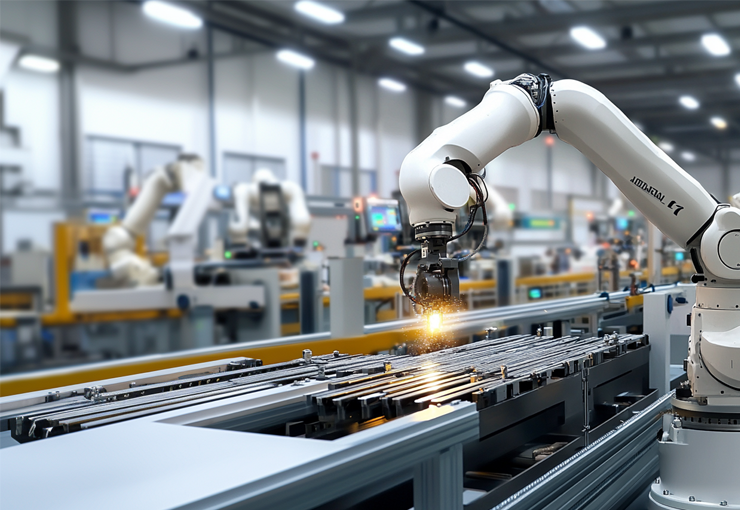
Servo drives for robotics are fundamental in robotic arms, delivering precise control over each joint's movement. They enable smooth, accurate positioning and speed regulation, crucial for tasks like assembly, welding, and material handling. The closed-loop feedback in robotics servo drive systems ensures that robotic arms perform with high repeatability and minimal error, enhancing dexterity and responsiveness. This precision is vital for applications requiring delicate manipulation or heavy lifting, making servo drives robot arm control indispensable in industrial robotics.
Automated Guided Vehicles (AGVs): Accurate Drive and Steering Control
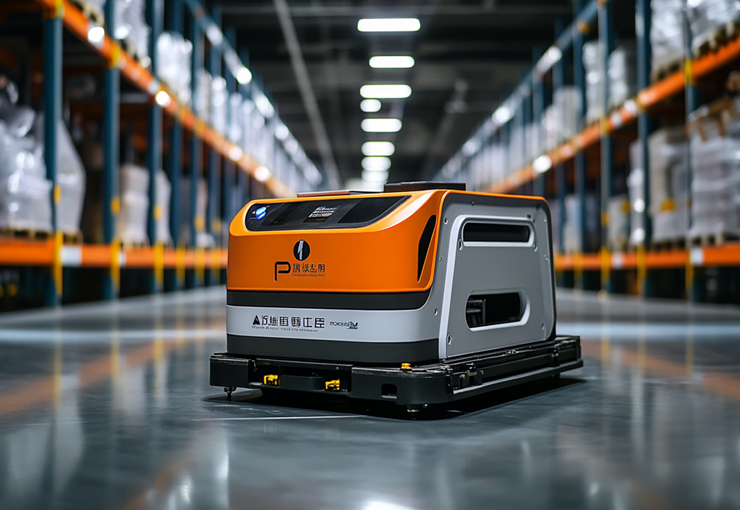
In automated guided vehicles, servo drives robotics applications provide exact control over wheel speed and steering angles. This precision allows AGVs to navigate complex warehouse layouts safely and efficiently. Robotics motion control servo drives deliver rapid response to changing conditions, maintaining stability and smooth operation. Their integration improves energy efficiency and reduces wear on mechanical components, enhancing overall performance in logistics automation.
Exoskeleton Robots: Responsive and Safe Motion Assistance
Servo drives automation robotics are key to exoskeleton robots, which augment human movement. These drives offer real-time feedback and adaptive control, ensuring safe and natural motion assistance. The compact size and high torque output of servo motor drives in robotics enable lightweight, wearable designs. By precisely modulating joint movements, servo drives robotics integration enhances user comfort and safety, making exoskeletons viable for rehabilitation and industrial use.
Robotic Welding and Assembly: Smooth, Repeatable Movements
Servo drives industrial robotics applications in welding and assembly lines guarantee consistent, smooth movements. They allow robots to maintain exact speed and position during complex tasks, improving weld quality and assembly accuracy. Servo drive technology robotics ensures repeatability, reducing defects and downtime. This results in higher productivity and better product quality, proving the benefits of servo drives in robotics precision and performance.
Camera Systems and Gimbals: Stabilization and Precise Positioning
In camera stabilization systems and gimbals, servo drives robotics benefits include precise angular control and quick response to motion changes. Robotics servo drive systems maintain camera orientation, compensating for vibrations or operator movement. This capability is essential for high-quality video capture in drones, filmmaking, and surveillance. The compact form factor and smooth operation of servo drives make them ideal for these dynamic applications.
Pick-and-Place Robots: Fast and Accurate Object Handling
Servo drives robot arm control enhances pick-and-place robots by enabling rapid, precise positioning. Their high acceleration and deceleration capabilities reduce cycle times without sacrificing accuracy. Robotics servo drive systems ensure consistent grip and release motions, critical for handling delicate or varied objects. The energy efficiency and programmability of servo drives robotics integration improve overall system performance and flexibility.
Humanoid Robots: Coordinated Multi-Joint Control
Humanoid robots rely on multiple servo drives for robotics applications to coordinate complex joint movements. Servo drives provide synchronized control over limbs, head, and torso, enabling natural and balanced motions. The feedback loops in robotics motion control servo drives allow adaptive responses to environmental changes, improving stability and interaction. These capabilities are crucial for advanced humanoid functions like walking, grasping, and communication.
Tip: When selecting servo drives for specific robotics applications, consider the unique torque, speed, and feedback requirements to maximize precision and efficiency.
Advantages of Using Servo Drives in Robotics
High Precision and Repeatability in Motion Control
Servo drives for robotics excel in delivering high precision and repeatability. Their closed-loop feedback systems constantly monitor and adjust motor position and speed, ensuring movements are accurate and consistent. This level of control is crucial for robotics servo drive systems used in applications like robotic arms and pick-and-place robots, where even minor deviations can affect performance. The precise positioning capabilities of servo drives robotics integration enable robots to perform complex tasks reliably, improving overall system efficiency and product quality.
Energy Efficiency and Low Power Consumption
Servo drives automation robotics solutions are designed for optimal energy use. They consume power primarily during movement, reducing idle energy waste. This efficiency is especially important in battery-operated robots like exoskeletons and automated guided vehicles (AGVs), where power conservation extends operational time. Additionally, servo drives robotics benefits include regenerative braking and optimized current control, which further enhance energy savings. Lower power consumption also means reduced heat generation, contributing to longer component life and safer operation.
Compact Size with High Torque Output
Despite their small form factor, servo motor drives in robotics deliver high torque output. This compactness allows seamless integration into tight spaces such as robotic joints or wearable exoskeletons. The high torque density supports powerful, precise movements without bulky hardware. Robotics motion control servo drives combine size and strength, enabling lightweight designs that do not compromise on performance. This advantage is vital for applications requiring both agility and strength, such as humanoid robots and robotic welding systems.
Smooth and Stable Operation with Feedback Loops
Servo drives industrial robotics systems use continuous feedback loops to maintain smooth and stable operation. They adjust voltage and current in real time to correct any errors or disturbances. This dynamic control reduces vibration and mechanical stress, leading to quieter and more reliable robotic movements. Smooth operation is essential for delicate tasks like robotic welding and camera stabilization, where jerky motions could cause defects or blurry images. The stability provided by servo drive technology robotics enhances both precision and durability.
Ease of Programming and Integration in Robotic Systems
Servo drives robotics integration is simplified by advanced control interfaces and software tools. Many servo drives support standardized communication protocols, making them compatible with various robotic controllers and automation platforms. Programmers can easily configure parameters such as torque limits, speed profiles, and acceleration curves to tailor performance to specific applications. This flexibility reduces development time and costs. Moreover, user-friendly programming environments facilitate quick troubleshooting and optimization, ensuring seamless deployment in complex robotic systems.
Tip: When optimizing robotic systems, select servo drives that balance precision, energy efficiency, and compactness to maximize performance and reliability in your application.
Key Features to Consider When Selecting Servo Drives for Robotics
When choosing servo drives for robotics, several critical features must align with your specific application needs. Understanding these factors ensures optimal performance, reliability, and integration ease in your robotics system.
Torque and Speed Requirements Based on Application
Every robotics application demands unique torque and speed profiles. For instance, robotic arms performing delicate assembly require precise low-speed control with consistent torque. Conversely, automated guided vehicles (AGVs) may need higher torque at variable speeds for navigation and steering. Selecting servo drives that match these torque and speed requirements is vital for achieving desired performance and avoiding under- or over-specification. Consider peak and continuous torque ratings, as well as speed ranges, to ensure the servo drive can handle both the dynamic and steady-state demands of your robotics application.
Feedback Mechanisms: Encoders vs. Potentiometers
Servo drives rely on feedback devices to monitor motor position and speed. Encoders, especially optical or magnetic types, provide high-resolution, accurate feedback suited for robotics servo drive systems requiring precision and repeatability. Potentiometers offer simpler, cost-effective position sensing but with lower accuracy and durability. For robotics applications demanding high precision—such as robotic welding or humanoid robots—encoders are generally preferred. Additionally, incremental and absolute encoders provide different benefits; absolute encoders retain position data after power loss, enhancing reliability.
Thermal Management and Heat Dissipation
Servo drives generate heat during operation, which can affect performance and longevity. Effective thermal management is crucial, especially in compact or enclosed robotic designs where airflow is limited. Look for servo drives with built-in thermal protection, heat sinks, or options for external cooling. Proper heat dissipation prevents thermal shutdowns and maintains consistent servo drives robotics performance. In applications like exoskeleton robots or dense industrial robotics, managing heat ensures safety and user comfort.
Form Factor and Integration Constraints
Robotics systems often have tight space and weight restrictions. Compact servo drives with flexible mounting options facilitate easier integration into robot joints or chassis. The form factor should align with the mechanical design without compromising torque or cooling. Modular servo drives robotics integration can simplify system upgrades and maintenance. Additionally, consider cable management and connector types to streamline installation and reduce potential points of failure.
Safety Standards and Reliability Considerations
Robotics applications, especially those involving human interaction like exoskeletons or collaborative robots, require servo drives that comply with safety standards such as ISO 13849 or IEC 61508. Features like safe torque off (STO), fault detection, and redundant feedback enhance operational safety. Reliable servo drives robotics systems reduce downtime and maintenance costs. Evaluate manufacturer certifications and track records to ensure long-term dependability.
Tip: Always match servo drive specifications—torque, feedback type, size, and safety features—to your robot’s precise needs to maximize efficiency and reliability.
Comparing Servo Drives to Other Motor Control Solutions in Robotics
Servo Drives vs. Stepper Motors: Precision and Efficiency
Servo drives for robotics offer superior precision compared to stepper motors. While stepper motors move in fixed increments without feedback, servo drives use encoders or other sensors to constantly monitor position and speed. This closed-loop system ensures exact positioning and smooth motion, critical in robotics servo drive systems where precision impacts task quality. Servo drives also deliver higher torque at varying speeds and maintain efficiency during load changes, unlike stepper motors that can lose torque rapidly at higher speeds. For applications demanding fast, accurate, and repeatable motion—like robotic arms or pick-and-place robots—servo drives robotics integration is often the better choice.
Advantages Over Open-Loop Motor Controls
Open-loop motor controls, such as basic DC motors or simple stepper systems, lack feedback mechanisms. This absence can cause missed steps or positioning errors under load variations, reducing reliability. Servo drives robot arm control uses real-time feedback to adjust motor output, preventing errors and ensuring consistent performance. This feedback loop enhances robotics motion control servo drives by enabling adaptive corrections, improving precision and reducing wear on mechanical parts. Additionally, servo drives robotics benefits include energy savings by applying only necessary power, unlike open-loop systems that may waste energy compensating for inaccuracies.
Cost-Benefit Analysis for Different Robotic Applications
Though servo drives generally have a higher initial cost than stepper motors or open-loop systems, their long-term benefits often justify the investment. In high-precision industrial robotics, the improved accuracy and reliability reduce downtime and scrap rates, leading to cost savings. For less demanding tasks or budget-sensitive projects, stepper motors might suffice. However, servo drives automation robotics excels in applications requiring dynamic torque control, fast acceleration, and smooth operation. Evaluating your robotics application’s complexity, duty cycle, and precision needs helps determine the most cost-effective motor control solution.
When to Choose Custom Servo Drives vs. Off-the-Shelf Solutions
Off-the-shelf servo drives robotics integration offers quick deployment and proven reliability for standard applications. They come with preset parameters and support common communication protocols, easing integration. However, unique robotics servo drive systems with specialized torque, speed, or form factor requirements may benefit from custom servo drives. Custom solutions allow tailoring feedback types, thermal management, and safety features to specific needs, enhancing performance and longevity. For cutting-edge robotics projects or those with stringent safety standards, investing in custom servo drive technology robotics ensures optimal results and future scalability.
Tip: Evaluate your robotic application's precision, speed, and load dynamics carefully to choose between servo drives, stepper motors, or open-loop controls for optimal performance and cost-efficiency.
Challenges and Best Practices in Implementing Servo Drives for Robotics
Implementing servo drives for robotics involves overcoming several technical challenges to ensure peak performance and reliability. Addressing these challenges with best practices helps maximize the benefits of robotics servo drive systems.
Managing Heat Generation in Compact Robotic Designs
Servo drives robotics applications often require compact sizes, especially in robotic arms and exoskeletons. However, tight spaces limit airflow, making heat dissipation a critical concern. Excess heat can degrade servo drives robotics performance and shorten component lifespan. To manage heat effectively:
Use servo drives with built-in thermal protection and efficient heat sinks.
Incorporate external cooling methods such as fans or liquid cooling when necessary.
Opt for energy-efficient servo drives that minimize power loss as heat.
Design mechanical layouts that promote natural convection and airflow.
Ensuring Real-Time Feedback and Control Accuracy
Robotics servo drive systems rely on real-time feedback from encoders or sensors to maintain precise motion control. Delays or inaccuracies in feedback can cause positioning errors and unstable operation. Best practices include:
Selecting high-resolution encoders with fast response times.
Using robust communication protocols to reduce signal latency and noise.
Implementing advanced filtering and error correction algorithms.
Regularly calibrating sensors to maintain accuracy over time.
Minimizing Latency in High-Speed Robotic Movements
High-speed robotic applications, such as pick-and-place robots or welding arms, demand minimal latency between command input and motor response. Latency can degrade servo drives robotics precision and slow reaction times. To reduce latency:
Choose servo drives with high processing speeds and optimized firmware.
Employ direct communication links (e.g., EtherCAT or CANopen) for faster data exchange.
Simplify control loops where possible to speed up processing.
Integrate servo drives closely with the robot controller to avoid bottlenecks.
Optimizing Power Consumption for Battery-Operated Robots
Battery-powered robots like exoskeletons or mobile AGVs require servo drives that balance performance with energy efficiency. Minimizing power consumption extends operational time and reduces heat generation. Best approaches involve:
Selecting servo drives with low standby power and efficient current control.
Utilizing regenerative braking features to recover energy during deceleration.
Implementing adaptive control algorithms that adjust power based on load.
Designing motion profiles that avoid unnecessary acceleration or torque peaks.
Maintenance and Longevity of Servo Drive Systems
Long-term reliability is essential for industrial and medical robotics. Regular maintenance preserves servo drives robotics benefits and prevents unexpected downtime. Key practices include:
Monitoring operating temperatures and vibration levels to detect early faults.
Scheduling periodic inspections and cleaning of servo drive components.
Updating firmware to incorporate performance improvements and bug fixes.
Keeping spare parts and calibration tools readily available for quick repairs.
Tip: Prioritize thermal management, real-time feedback accuracy, and efficient communication protocols when implementing servo drives for robotics to ensure reliable, high-performance motion control.
Future Trends in Servo Drives for Robotics
Integration of AI and Machine Learning for Adaptive Control
Servo drives for robotics are evolving by incorporating AI and machine learning algorithms. This integration enables adaptive control, where the servo drive learns from operational data to optimize performance dynamically. For example, robotics servo drive systems can adjust torque and speed profiles in real time to handle varying loads or unexpected disturbances. This smart adaptation improves precision, reduces energy consumption, and extends component life. As a result, servo drives robotics applications become more efficient and reliable, especially in complex environments like manufacturing floors or autonomous robots.
Advances in Miniaturization and Power Density
The trend toward miniaturization continues to shape servo drive technology robotics. Smaller servo drives with higher power density allow integration into compact robotic joints and wearable devices without sacrificing torque or performance. Robotics motion control servo drives benefit from advances in semiconductor technology and improved cooling methods, enabling more power in less space. This is crucial for applications such as exoskeleton robots and humanoid robots, where space and weight constraints are significant. Miniaturized servo drives robotics integration also supports more agile and lightweight robotic designs.
Improved Communication Protocols for Networked Robotics
As robotics systems become more interconnected, servo drives industrial robotics are adopting faster and more reliable communication protocols. Protocols like EtherCAT, CANopen, and Profinet enable seamless synchronization and real-time data exchange between multiple servo drives and central controllers. This connectivity enhances coordination in multi-axis robotic arms and automated guided vehicles (AGVs). Improved communication reduces latency and jitter, boosting robotics servo drive systems' precision and responsiveness. It also simplifies diagnostics and maintenance by providing detailed operational data over the network.
Development of More Robust and Safe Servo Systems
Safety and robustness are paramount in servo drives robotics performance, especially in human-robot collaboration and medical robotics. Future servo drives will feature enhanced safety functions, such as Safe Torque Off (STO), redundant feedback loops, and fault-tolerant designs. These improvements ensure safer operation around humans and reduce downtime due to failures. Additionally, servo drives robotics benefits include increased resistance to electrical noise, vibration, and temperature extremes. Robust servo drives support more reliable and long-lasting robotic systems in harsh industrial environments.
Expanding Applications in Medical and Consumer Robotics
Servo drives for robotics are finding growing use in medical and consumer sectors. In medical robotics, precise and smooth servo drives enable delicate surgical procedures, rehabilitation devices, and diagnostic machines. Consumer robotics, including home automation, personal assistants, and entertainment robots, also benefit from affordable, compact servo drives robotics integration. These applications demand low noise, energy efficiency, and ease of programming. As servo drive technology robotics advances, the accessibility and functionality of medical and consumer robots will continue to expand, improving quality of life and convenience.
Tip: Embrace servo drives with AI-driven adaptive control and advanced communication protocols to future-proof your robotics systems for enhanced precision and safety.
Conclusion
Servo drives enhance robotics by providing precise control, energy efficiency, and smooth operation in various applications. They improve performance in robotic arms, AGVs, exoskeletons, and more. Strategic selection and proper implementation of servo drives ensure optimal results tailored to specific torque, speed, and feedback needs. As robotics innovation grows, servo drives become increasingly vital for advanced, reliable, and safe systems. Shenzhen Tiger offers high-quality servo drive products that deliver these benefits, supporting cutting-edge robotics solutions worldwide.
FAQ
Q: What are the primary uses of servo drives for robotics?
A: Servo drives for robotics are primarily used in robotic arms, automated guided vehicles (AGVs), exoskeletons, welding and assembly robots, camera stabilization, pick-and-place robots, and humanoid robots. They provide precise motion control, high torque, and smooth operation essential for these robotics servo drive systems.
Q: How do servo drives robotics integration improve robot arm control?
A: Servo drives robotics integration enhances robot arm control by delivering precise joint movement, speed regulation, and real-time feedback. This improves dexterity, repeatability, and performance in applications like assembly and welding, ensuring high robotics servo drive system precision.
Q: Why choose servo drives over other motor controls in robotics?
A: Servo drives for robotics offer superior precision, efficiency, and adaptive control compared to stepper motors or open-loop systems. Their closed-loop feedback ensures accurate positioning and energy savings, making them ideal for robotics motion control servo drives requiring high performance.
Q: What are the main benefits of using servo drives in robotics applications?
A: Benefits include high precision and repeatability, energy efficiency, compact size with high torque output, smooth operation through feedback loops, and ease of programming and integration. These advantages improve robotics servo drive systems' overall performance and reliability.
Q: How can I troubleshoot common issues with servo drives for robotics?
A: Troubleshooting involves checking thermal management to prevent overheating, ensuring real-time feedback accuracy from encoders, minimizing communication latency, and maintaining proper calibration. Following these best practices helps maintain optimal servo drives robotics performance.


