Are automated guided vehicles (AGVs) reshaping logistics? Absolutely. Their efficiency depends heavily on motion solutions. Geared motors play a crucial role in this automation.
In this article, you’ll learn how geared motors enhance AGV performance. We’ll explore their impact on precision, control, and energy efficiency in intelligent logistics systems.
Geared Motor Technologies Driving AGV Motion Solutions
Types of Geared Motors Used in AGVs
Automated Guided Vehicles (AGVs) rely on various geared motor types to meet diverse operational needs. Commonly, planetary gear motors stand out for their compact size and high torque density, making them ideal for tight warehouse spaces. Additionally, servo motor gearboxes paired with high torque servo motors provide precise control essential for accurate navigation and load handling. For heavier-duty applications, hydraulic gear motors and hydraulic motor gearboxes offer robust power delivery and durability. Smaller AGVs often utilize gear motor N20 or motor gearbox DC units, which combine efficiency with compactness. The integration of motor DC with encoder enhances feedback accuracy, enabling precise speed and position control.
Advantages of Geared Motors for Precision and Torque
Geared motors deliver the crucial balance between torque and speed for AGVs. The gear reduction starter mechanism within these motors allows high torque output at low speeds, ensuring smooth acceleration and load handling. This precision is vital for tasks like pallet lifting or navigating narrow aisles. Using a servo gear reducer enhances motion control, allowing AGVs to maintain stability during complex maneuvers. Moreover, gear motor electric solutions often feature low backlash and high efficiency, reducing energy waste and improving battery life.
Integration of Geared Motors with AGV Control Systems
Effective AGV performance depends on seamless integration between geared motors and control systems. Controllers utilize feedback from motor DC with encoder components to adjust motor speed and torque dynamically. This closed-loop control ensures responsive navigation and obstacle avoidance. Advanced AGV systems incorporate servo motor and gearbox combinations for precise positioning, essential in automated warehouses. Communication protocols like CAN bus or EtherCAT facilitate real-time data exchange between motor drivers and central control units, optimizing motion commands and diagnostics.
Energy Efficiency and Power Consumption Considerations
Energy efficiency is a priority in AGV design. Geared motors with optimized planetary motor gearboxes reduce mechanical losses, conserving battery power. The selection of motor types, such as brushless DC motors paired with efficient gearboxes, minimizes heat generation and extends operational time. Additionally, regenerative braking enabled by some geared motor systems can recover energy during deceleration, further improving efficiency. Proper sizing of the gear motor electric components ensures that motors operate within their optimal load range, avoiding unnecessary power consumption.
Durability and Maintenance of Geared Motors in Logistics Environments
AGVs operate in demanding environments requiring durable motion components. Geared motors used in logistics are built to withstand dust, moisture, and mechanical shocks. For example, hydraulic gear motors offer excellent resistance to harsh conditions and require less frequent servicing. Modular designs in servo gear reducers facilitate easy replacement of worn parts, reducing downtime. Regular maintenance schedules and condition monitoring, often supported by integrated encoders, help predict failures and plan timely interventions.
Customization and Modularity of Geared Motor Solutions
Customization is key to meeting specific AGV requirements. Manufacturers offer modular geared motor solutions that can be tailored by adjusting gear ratios, motor types, and mounting configurations. This flexibility allows AGVs to handle different payloads and speeds efficiently. For instance, combining a servo motor gearbox with a specific gear reduction starter can optimize performance for unique tasks. Modular components also simplify upgrades, enabling logistics operators to adapt to evolving operational demands without replacing entire systems.
Emerging Trends in Geared Motor Technology for AGVs
The future of geared motors in AGVs includes smart, connected solutions. Integration with IoT enables real-time monitoring of motor health and performance. Advances in materials and manufacturing improve power density and reduce size, benefiting compact AGV designs. Additionally, developments in high torque servo systems enhance precision and responsiveness. Hybrid systems combining electric and hydraulic gear motors are gaining traction for heavy-load applications. These trends promise greater efficiency, reliability, and adaptability in intelligent logistics.
Tip: When selecting geared motors for AGVs, prioritize units with integrated encoders and modular gearboxes to enhance control precision and simplify maintenance.
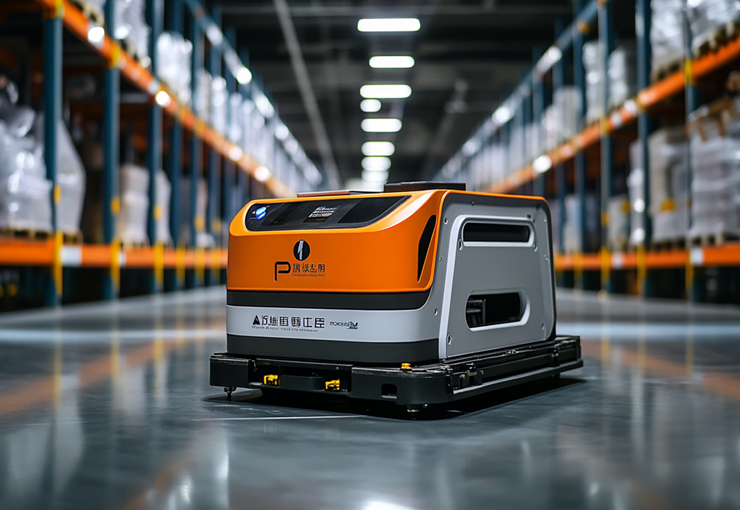
Optimizing AGV Performance with Advanced Motion Control
Motion Control Algorithms for Smooth Navigation
Advanced motion control algorithms are essential for ensuring AGVs navigate smoothly and efficiently. These algorithms manage acceleration, deceleration, and turning by precisely regulating the geared motor electric output. For example, a servo motor and gearbox setup allows the control system to finely tune the torque and speed, enabling AGVs to handle tight corners and variable loads without jerky movements. Implementing adaptive control algorithms helps AGVs adjust dynamically to different floor conditions and payload weights, maintaining consistent performance.
Sensor Integration for Real-Time Motion Adjustment
Real-time sensor data integration is vital for responsive AGV motion control. Sensors such as lidar, ultrasonic, and infrared provide environmental feedback, which the control system uses to adjust the motor DC with encoder inputs instantly. This integration ensures the high torque servo motors respond quickly to obstacles or changes in terrain. By continuously monitoring wheel speed and position via encoders, the system maintains precise control over the planetary gear motor output, improving navigation accuracy and safety.
Path Planning and Dynamic Obstacle Avoidance
Effective path planning algorithms leverage sensor inputs and motion control to avoid obstacles dynamically. The precision of servo gear reducers and gear reduction starters in geared motors allows AGVs to execute complex maneuvers smoothly. When an obstacle is detected, the system recalculates the route and adjusts motor commands in real-time, ensuring uninterrupted operation. This capability is especially critical in busy warehouses where AGVs must share space with humans and other machines.
Impact of Geared Motor Precision on AGV Stability
The precision of geared motors significantly affects AGV stability. Motors like the planetary motor gearbox and servo motor gearbox offer low backlash and high positional accuracy, which translates into stable movement and load handling. Precise control reduces vibrations and oscillations during starts and stops, preventing cargo shifts and enhancing safety. Moreover, using motor gearbox DC units with integrated encoders allows for fine-tuned speed regulation, which is crucial for maintaining balance on uneven surfaces.
Feedback Systems and Closed-Loop Control
Closed-loop control systems rely on feedback from encoders and sensors to adjust motor performance continuously. For instance, a motor DC with encoder provides real-time data on shaft position and speed, enabling the controller to correct deviations instantly. This feedback loop optimizes torque delivery from the hydraulic gear motor or electric geared motor, improving responsiveness and reducing wear. Closed-loop control is fundamental in maintaining consistent AGV speed and direction, especially during complex tasks.
Reducing Downtime Through Predictive Maintenance
Predictive maintenance uses data from motor sensors and encoders to forecast potential failures before they occur. Monitoring parameters like temperature, vibration, and current draw in gear motor N20 or larger units helps identify early signs of wear. Integrating these insights into the AGV control system allows operators to schedule maintenance proactively, minimizing unexpected downtime and extending the life of hydraulic motor gearboxes and other components.
Software and Hardware Synergy in Motion Optimization
Optimizing AGV motion requires seamless synergy between software algorithms and hardware components. Advanced control software communicates with motor drivers, such as those in servo gear reducers, to execute precise commands based on real-time data. This coordination ensures that the gear motor electric operates within optimal parameters, balancing power consumption and performance. Modern AGV systems also use modular hardware architectures, enabling easy upgrades to both software and motor components, adapting to evolving logistics demands.
Tip: Leverage integrated encoder feedback and adaptive motion control algorithms to enhance AGV navigation precision and reduce mechanical stress on geared motors.
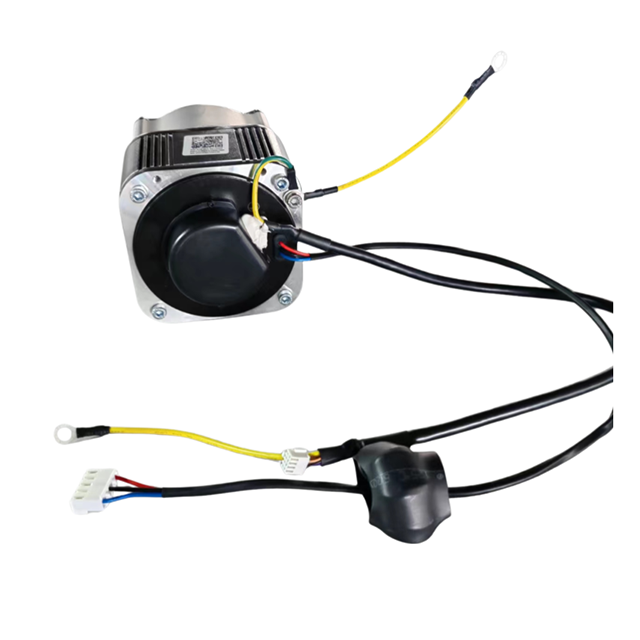
Enhancing Safety and Reliability through Motion Solutions
Collision Avoidance Technologies Powered by Motion Systems
Collision avoidance is critical in AGV operations to protect both assets and personnel. Modern AGVs rely on motion systems driven by servo motor and gearbox assemblies paired with advanced sensors like lidar and ultrasonic detectors. These sensors feed real-time data to the control system, which adjusts the gear motor electric output instantly to prevent collisions. The precision offered by planetary gear motors and servo gear reducers ensures smooth deceleration and direction changes, allowing AGVs to navigate crowded warehouse environments safely.
Speed Regulation and Emergency Stop Mechanisms
Effective speed regulation maintains safe AGV operation. Controllers use feedback from motor DC with encoder units to monitor velocity precisely. When sudden stops are necessary, the gear reduction starter mechanism enables rapid torque changes, allowing emergency stops without causing mechanical damage or load instability. These systems often integrate fail-safe braking features within the hydraulic gear motor or electric geared motor, ensuring reliable stopping power even during power loss or system faults.
Geared Motor Fail-Safe Features
Geared motors designed for AGVs incorporate fail-safe mechanisms to enhance reliability. For example, high torque servo motors paired with servo motor gearboxes include features such as mechanical brakes or electromagnetic clutches that engage automatically during power failure. Additionally, many motor gearbox DC designs embed overload protection and thermal sensors to prevent damage. These safeguards minimize downtime and maintain operational continuity in demanding logistics settings.
Environmental Adaptability of Motion Components
AGVs operate in diverse environments, from dusty warehouses to humid loading docks. Motion components like hydraulic motor gearboxes are built to resist contaminants and moisture, ensuring long-term durability. Electric geared motors with sealed housings and corrosion-resistant materials also perform well under harsh conditions. The compact size of gear motor N20 units allows integration into tight spaces without sacrificing protection. Such adaptability reduces maintenance needs and supports continuous AGV operation.
Compliance with Safety Standards in Logistics Automation
Safety compliance is non-negotiable in logistics automation. Motion solutions featuring planetary motor gearboxes and servo gear reducers meet international standards such as ISO 3691-4 for industrial trucks and AGVs. These standards govern aspects like speed limits, emergency stop response times, and collision avoidance capabilities. Manufacturers ensure that geared motors and their control systems undergo rigorous testing, providing logistics operators with confidence in their AGV fleets' safety and reliability.
Tip: Choose geared motors with integrated fail-safe brakes and encoder feedback to enhance AGV safety and ensure compliance with industry safety standards.
Energy Efficiency and Sustainability in AGV Motion Systems
Reducing energy consumption and promoting sustainability are critical goals in designing AGV motion systems. Geared motors play a pivotal role in achieving these objectives by enhancing efficiency and minimizing environmental impact.
Reducing Carbon Footprint with Energy-Efficient Geared Motors
Energy-efficient geared motors, such as brushless planetary gear motors and optimized servo gear reducers, significantly lower power consumption in AGVs. Their design minimizes friction and mechanical losses, allowing the motor to deliver high torque effectively without wasting energy. For instance, coupling a high torque servo motor with an efficient servo motor gearbox ensures precise motion control while conserving battery power. This efficiency directly translates into reduced carbon emissions by extending operational time per charge and decreasing the frequency of battery recharges.
Optimizing Route Planning to Minimize Energy Use
Beyond the hardware, intelligent route planning algorithms complement geared motor efficiency. By calculating the shortest and least energy-intensive paths, AGVs reduce unnecessary movements. The precise torque control from gear motor electric systems enables smooth acceleration and deceleration, further conserving energy during navigation. Integration of feedback from motor DC with encoder units allows real-time adjustments to motor output, ensuring the AGV operates within optimal energy parameters throughout its route.
Battery Life Extension Through Motion System Design
Efficient motion systems extend battery life, reducing downtime and maintenance costs. Selecting geared motors like the compact gear motor N20 or robust hydraulic gear motor variants, matched with appropriate gear ratios, ensures motors operate near their peak efficiency. Additionally, regenerative braking features in some geared motor configurations recover energy during deceleration phases, feeding power back into the battery. This synergy between motor design and control strategy maximizes battery longevity and operational uptime.
Sustainable Materials and Manufacturing for Motion Components
Sustainability also involves the materials and processes used in geared motor manufacturing. Many modern motor gearbox DC and planetary motor gearbox producers adopt eco-friendly materials and recycling practices. Lightweight, durable components reduce the overall energy required for AGV movement. Furthermore, modular designs simplify repairs and upgrades, extending the service life of motion components and reducing waste.
Tip: Choose geared motors with high-efficiency designs and regenerative capabilities to enhance AGV energy savings and support sustainable logistics operations.
Case Studies: Geared Motor Applications in Intelligent Logistics
AGV Forklift Systems and Geared Motor Integration
AGV forklift systems rely heavily on precise and powerful motion solutions to handle lifting and transporting tasks efficiently. Integrating servo motor and gearbox assemblies with advanced control systems enables smooth extension and retraction of forklift arms. For instance, the use of high torque servo motors combined with servo gear reducers provides the necessary force and accuracy for stable load handling. Communication protocols like CAN bus and EtherCAT ensure real-time data exchange between the motor DC with encoder units and the controller, allowing precise positioning and speed control. This integration enhances the forklift’s responsiveness and operational safety, critical in busy warehouse environments.
Compact Geared Motors in High-Density Warehouse AGVs
High-density warehouse operations demand AGVs that are both compact and powerful. Here, planetary gear motors and gear motor N20 units excel due to their small footprint and high torque output. These motors enable AGVs to navigate narrow aisles and tight storage racks effectively. The compact design of these geared motors also reduces the vehicle’s overall weight, improving energy efficiency. Additionally, pairing these with motor gearbox DC systems that include integrated encoders allows for precise speed and position feedback, ensuring smooth acceleration and deceleration in constrained spaces.
Motion Solutions in Modular Assembly Line AGVs
Modular assembly lines benefit from AGVs equipped with flexible and customizable motion systems. Using servo motor gearboxes paired with gear reduction starters, these AGVs can adapt their speed and torque to varying payloads and tasks. For example, automotive manufacturers use these AGVs to transport parts between workstations, synchronizing movements with human operators. The precision of servo gear reducers supports accurate placement, reducing errors and boosting productivity. Integration with advanced control software allows seamless coordination between multiple AGVs, optimizing assembly line flow.
SLAM Navigation and Motion Control in Internal Logistics
Simultaneous Localization and Mapping (SLAM) navigation is transforming internal logistics by enabling AGVs to operate autonomously in dynamic environments. Geared motors such as planetary motor gearboxes paired with motor DC with encoder units provide the precise motion control necessary for SLAM systems. Real-time feedback from encoders helps adjust motor torque and speed instantly, allowing AGVs to navigate obstacles and optimize routes efficiently. This synergy between motion hardware and navigation algorithms enhances reliability and flexibility in complex warehouse layouts.
Performance Improvements from Upgraded Geared Motor Systems
Upgrading geared motor systems in existing AGVs can significantly improve performance. Replacing older motors with advanced hydraulic gear motors or high torque servo units increases load capacity and precision. Enhanced servo motor gearboxes reduce backlash and improve responsiveness, leading to smoother operation. Incorporating modern motor DC with encoder technology enables better feedback for closed-loop control, reducing wear and extending motor life. These improvements translate into higher uptime, lower maintenance costs, and more efficient logistics processes.
Tip: When selecting geared motors for intelligent logistics AGVs, prioritize compact, high-torque units with integrated encoder feedback to maximize precision and adaptability in diverse operational scenarios.
Future Trends in Geared Motor Motion Solutions for AGVs
Advances in Smart Geared Motors with IoT Connectivity
Smart geared motors are revolutionizing AGV motion solutions by integrating IoT connectivity. These motors, such as advanced planetary gear motors and servo motor gearboxes, now come equipped with embedded sensors and communication modules. They provide real-time data on performance, temperature, and wear, enabling remote monitoring and diagnostics. This connectivity helps logistics operators anticipate maintenance needs and reduce downtime. For example, a motor DC with encoder integrated into a smart geared motor can continuously transmit precise position and speed data to cloud platforms, enhancing fleet management and operational efficiency.
AI-Driven Motion Control Enhancements
Artificial intelligence is enhancing motion control in AGVs by optimizing motor commands and navigation. AI algorithms analyze data from sensors and high torque servo motors to predict load changes and adapt torque output dynamically. This results in smoother acceleration and more precise handling, even in complex warehouse layouts. Combining AI with servo gear reducers and gear reduction starters improves path planning, obstacle avoidance, and energy consumption. The synergy between AI and geared motor technology leads to smarter, more autonomous AGVs that can self-optimize their motion for better productivity.
Miniaturization and Increased Power Density
The demand for compact AGVs in tight spaces drives innovation in miniaturized geared motors. Advances in materials and design have allowed manufacturers to produce smaller gear motor N20 units and compact motor gearbox DC assemblies without sacrificing torque or durability. These miniaturized motors offer increased power density, meaning more torque in less space. This benefits applications like high-density warehouses and medical logistics, where space and weight constraints are critical. The trend toward smaller, yet powerful, planetary motor gearboxes ensures AGVs remain agile and efficient in confined environments.
Collaborative Robots and Human-Machine Motion Integration
Future AGVs will increasingly collaborate with humans, requiring motion solutions that ensure safety and fluid interaction. Geared motors such as servo motor and gearbox systems are designed for precise and responsive control, enabling AGVs to adjust speed and trajectory safely around people. Integration of force sensors and encoder feedback allows these motors to detect contact and respond instantly, preventing accidents. This human-machine collaboration enhances productivity in mixed environments like assembly lines and hospitals, where AGVs support workers without compromising safety.
Impact of 5G and Edge Computing on Motion Systems
The rollout of 5G networks and edge computing is set to transform AGV motion control. High-speed, low-latency communication enables real-time control of hydraulic gear motors and electric geared motors across large fleets. Edge computing processes sensor and encoder data locally, reducing delays and improving responsiveness. This technology supports sophisticated motion algorithms that adapt instantly to changing conditions. For instance, an AGV using a servo gear reducer can receive immediate path adjustments based on live inputs, enhancing navigation accuracy and safety. The combination of 5G and edge computing will unlock new levels of AGV coordination and efficiency in intelligent logistics.
Tip: Invest in smart geared motors with IoT connectivity and AI-driven control to future-proof your AGV fleet for enhanced performance and predictive maintenance.
Conclusion
Unlocking AGV potential relies on advanced geared motor motion solutions that deliver precision, torque, and energy efficiency. Innovations like integrated encoders and modular designs enhance control and simplify maintenance. These motion solutions are strategically vital for intelligent logistics, improving navigation, safety, and sustainability in dynamic environments. Adopting cutting-edge geared motor technologies ensures smoother operations and predictive maintenance. For superior performance and reliability, consider Shenzhen Tiger’s products, which provide tailored, high-quality geared motor systems designed to optimize your AGV fleet.
FAQ
Q: What is a geared motor and why is it important for AGV motion solutions?
A: A geared motor combines a motor and a gearbox to deliver controlled torque and speed. In AGVs, planetary gear motors and servo motor gearboxes are vital for precise navigation and load handling, ensuring smooth, efficient motion in intelligent logistics systems.
Q: How does a motor DC with encoder improve AGV performance?
A: Motor DC with encoder provides real-time feedback on speed and position, enabling closed-loop control. This enhances accuracy and responsiveness of geared motors like gear motor electric units, crucial for precise AGV navigation and obstacle avoidance.
Q: Why choose a high torque servo motor with a servo gear reducer for AGVs?
A: High torque servo motors paired with servo gear reducers offer precise torque control and stability, essential for handling varying payloads and complex maneuvers in intelligent logistics systems. This combination improves AGV efficiency and safety.
Q: What are the benefits of using hydraulic gear motors in AGV systems?
A: Hydraulic gear motors and hydraulic motor gearboxes provide robust power and durability, ideal for heavy-duty AGV applications. They offer reliable torque delivery and withstand harsh logistics environments, reducing maintenance needs.
Q: How do gear reduction starters contribute to AGV motion control?
A: Gear reduction starters enable geared motors to produce high torque at low speeds, allowing smooth acceleration and precise load handling. This feature is key in servo motor and gearbox setups for stable AGV operation.
Q: What factors affect the cost of geared motors for AGVs?
A: Cost depends on motor type (e.g., planetary gear motor vs. hydraulic gear motor), torque capacity, integration of encoders, and customization options like gear motor N20 or servo motor gearbox configurations tailored for specific AGV tasks.
Q: How can predictive maintenance reduce downtime in AGV geared motors?
A: Predictive maintenance uses data from motor DC with encoder and gear motor N20 sensors to detect wear early. This approach helps schedule timely repairs, extending the life of components such as hydraulic motor gearboxes and preventing unexpected failures.


