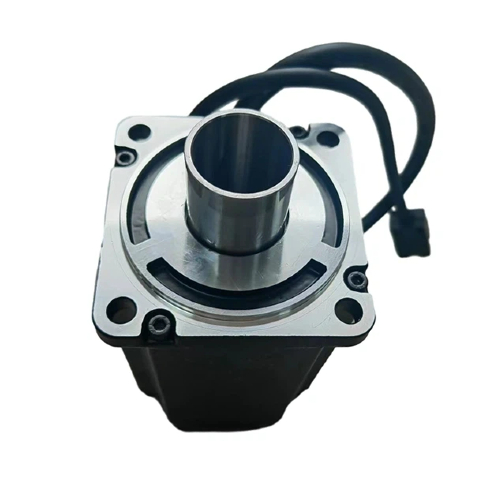
Motors are the heart of humanoid robots, enabling lifelike movement and precision. Choosing the right motors is complex. In this post, you’ll learn about key motor types, their roles, and selection challenges for humanoid robots.
Table of Contents
Toggle
Key Motor Types Used in Humanoid Robots
Humanoid robots rely on a variety of motors to mimic human movements accurately and efficiently. Selecting the right motor type is crucial for balancing speed, torque, precision, and size constraints. Below, we explore the primary motors used in humanoid robot actuators and joint systems, highlighting their unique benefits and typical applications.
Coreless DC Motors: High Speed and Efficiency Benefits
Coreless DC motors are prized for their lightweight and compact design. They feature an ironless rotor, which eliminates eddy current losses and reduces inertia. This design enables high-speed operation—often exceeding 10,000 rpm—and excellent efficiency. Coreless motors excel in applications requiring rapid, precise movements with low power consumption.
Advantages:
High power density
Low inertia for fast response
Smooth operation with minimal cogging
Typical Use: Finger and hand articulation in humanoid robots, where delicate and quick motions are essential.
Frameless Torque Motors: Compact Design and High Torque Output
Frameless torque motors integrate directly with the robot’s mechanical structure, removing the need for an external housing. This results in a compact, lightweight motor capable of delivering very high torque. Their low inertia and direct drive capability make them ideal for dynamic joints needing powerful, precise control.
Advantages:
Reduced size and weight
High torque, often enhanced with harmonic reducers
High-temperature tolerance for continuous operation
Typical Use: Shoulder and wrist actuators, where space is limited but torque demands are high.
Servo Motors: Precision Control for Dynamic Joints
Servo motors are essential for precise position and speed control in humanoid robots. They combine a motor with a feedback sensor and control electronics, enabling accurate joint movements. Servo motors are commonly used in complex, dynamic joints such as elbows and knees.
Advantages:
High precision and repeatability
Smooth dynamic motion control
Integration with advanced control systems
Typical Use: Elbow joints and other dynamic limbs requiring fine-tuned motion.
Stepper Motors: Applications in Low-Load Movements
Stepper motors move in discrete steps, making them suitable for applications where precise positioning is needed at low speeds and loads. Though they generally offer less torque than other motor types, their simplicity and reliability make them a good choice for smaller joints or sensor positioning.
Advantages:
Accurate open-loop control
Simple control without feedback
Cost-effective for low-load applications
Typical Use: Head rotation and sensor alignment in humanoid robots.
Brushless DC Motors (BLDC): Speed and Maintenance Advantages
Brushless DC motors provide high-speed operation with low maintenance due to the absence of brushes. They offer excellent speed-to-weight ratios, making them popular in robotics for continuous motion tasks. However, their torque density is moderate, and low-speed precision can be limited.
Advantages:
High efficiency and long lifespan
Low maintenance requirements
High speed capabilities (10,000–20,000 rpm)
Typical Use: Auxiliary movements such as waist rotation or arm swinging.
Linear Motors: High Acceleration and Speed Capabilities
Linear motors convert electrical energy directly into linear motion, offering rapid acceleration and high speeds. While they require precise guiding systems and tend to be more expensive, they provide smooth, frictionless motion ideal for leg actuators needing quick, powerful steps.
Advantages:
Direct linear force without mechanical transmission
Extremely fast response times
High acceleration and speed
Typical Use: Leg motion in humanoid robots for running or jumping.
Axial Flux Motors: Power Density and Reduced Inertia
Axial flux motors feature a disk-shaped design with a magnetic flux path parallel to the rotor axis. This design reduces rotor inertia and increases power density, making them excellent for biomimetic leg designs requiring agile, energy-efficient movements.
Advantages:
High torque-to-weight ratio
Compact and lightweight
Reduced inertia improves responsiveness
Typical Use: Biomimetic leg actuation and dynamic walking in advanced humanoid robots.
Detailed Applications of Motors in Humanoid Robot Components
Humanoid robots use a variety of advanced motors tailored to specific body parts and movements. Understanding which motor fits each component helps optimize performance, precision, and energy efficiency. Below, we explore the detailed applications of different motors in key humanoid robot joints and actuators.
Finger and Hand Articulation with Coreless DC Motors
Coreless DC motors are ideal for finger and hand articulation due to their lightweight, high-speed, and low-inertia design. These motors enable quick, delicate finger movements necessary for grasping and manipulating objects with precision. For example, Tesla’s Optimus robot employs individual coreless DC motors in each finger joint, allowing smooth, coordinated motions. The thumb often uses dual motors to achieve both bending and lateral movements, enhancing dexterity.
Shoulder and Wrist Actuation Using Frameless Torque Motors
Frameless torque motors provide the high torque and compact form factor needed for shoulder and wrist joints. Their integration directly into the robot’s mechanical structure reduces weight and size while delivering powerful rotational force. Combined with harmonic reducers, these motors handle the complex, load-bearing motions of shoulders and wrists, enabling humanoid robots to lift, rotate, and position arms with human-like strength and precision.
Elbow and Dynamic Joint Control via Servo Motors
Servo motors are essential for controlling dynamic joints such as elbows. Their built-in feedback systems allow precise position and speed control, ensuring smooth and repeatable motion. These motors support complex movements like bending and extending the elbow, critical for tasks that require fine motor skills or dynamic adjustments during locomotion or object handling.
Head Rotation and Sensor Positioning with Stepper Motors
Stepper motors suit head rotation and sensor alignment tasks where precise, incremental positioning is required at low loads. They offer reliable open-loop control without complex feedback systems. Robots like Pepper use stepper motors to smoothly rotate the head and adjust vision modules, enabling accurate sensor orientation for interaction and environment scanning.
Auxiliary Movements Like Waist Rotation Using Brushless DC Motors (BLDC)
BLDC motors combine high speed and low maintenance, making them suitable for auxiliary movements such as waist rotation or arm swinging. Their high efficiency and long lifespan support continuous operation during repetitive motions. Although their torque density is moderate, BLDC motors effectively handle non-load-critical movements that require smooth, sustained rotation.
Leg Motion and Rapid Acceleration Employing Linear Motors
Linear motors excel in leg actuators, providing direct linear force for fast acceleration and high-speed stepping. Their frictionless operation and rapid response enable humanoid robots to perform dynamic leg movements like running or jumping. The MIT Cheetah robot, for example, uses linear motors in its legs to achieve remarkable speed and agility, demonstrating the motors’ capability in high-performance locomotion.
Biomimetic Leg Designs Powered by Axial Flux Motors
Axial flux motors offer a high torque-to-weight ratio and reduced rotor inertia, making them perfect for biomimetic leg designs that mimic human muscle function. Their compact, lightweight construction enhances energy efficiency and responsiveness, which is critical for dynamic walking and balance. Robots like ETH Zurich’s biomimetic legs and Agility Robotics’ Cassie leverage axial flux motors to achieve natural, agile movement patterns.
Comparative Analysis of Motor Technologies for Humanoid Robots
Selecting the ideal motors for humanoid robots requires careful evaluation of various factors such as efficiency, torque, size, and durability. Understanding how different robotic motors types compare helps engineers optimize humanoid robot motor systems for specific functions.
Efficiency and Speed Comparison Across Motor Types
Efficiency directly impacts battery life and heat generation in humanoid robots. Coreless DC motors stand out with efficiencies often exceeding 80%, thanks to their ironless rotor design that reduces eddy current losses. Brushless DC motors (BLDC) also offer high efficiency and can achieve speeds between 10,000 and 20,000 rpm, making them suitable for continuous, high-speed tasks.
Stepper motors provide precise control but typically run at lower speeds and lower efficiency due to their discrete step operation. Frameless torque motors, while slightly less efficient than coreless DC motors, deliver high torque at moderate speeds, especially when paired with harmonic reducers.
Linear motors excel in acceleration and speed but consume more power due to the need for precise guiding systems. Axial flux motors combine high efficiency with excellent power density, making them efficient for dynamic leg movements.
Torque Output and Load Capacity Differences
Torque is crucial for load handling in humanoid robot joints. Frameless torque motors lead in torque output, capable of delivering peak torques up to several hundred Newton-meters, especially when integrated with harmonic reducers. This makes them ideal for heavy-load joints like shoulders and wrists.
Axial flux motors also provide a high torque-to-weight ratio, often surpassing traditional radial motors. Coreless DC motors, while efficient and fast, produce lower torque, limiting their use to low-load, high-speed joints such as fingers.
Servo motors offer a balanced combination of torque and precision, making them effective for dynamic joints like elbows and knees. BLDC motors provide moderate torque, suitable for auxiliary movements but less so for heavy load-bearing joints.
Size, Weight, and Integration Constraints
Humanoid robots demand compact and lightweight motors to maintain agility. Frameless torque motors save space by integrating directly into the robot’s mechanical structure, reducing motor volume by up to 40%. Coreless DC motors are extremely compact and lightweight, ideal for finger articulation.
Axial flux motors’ disk-shaped design reduces rotor inertia and size, benefiting biomimetic leg designs. Linear motors, however, require additional space for guiding rails and tend to be bulkier, which can be a challenge in compact humanoid robot frames.
Stepper motors and BLDC motors vary in size depending on their power ratings but generally fit well in smaller joints or auxiliary components.
Thermal Management and Durability Considerations
Motors operating continuously under load generate heat, which must be managed to prevent performance degradation. Frameless torque motors use high-temperature insulation materials, enabling operation at temperatures up to 180°C, enhancing durability.
Coreless DC motors benefit from superior heat dissipation due to their ironless rotor design, reducing thermal buildup. BLDC motors also have good thermal characteristics, contributing to their long lifespan and low maintenance.
Stepper motors can overheat if stalled or driven improperly, so thermal management is critical in their applications. Linear motors and axial flux motors, given their high power densities, require effective cooling systems to maintain durability during intense leg movements.
Advancements and Innovations in Humanoid Robot Motors
The field of humanoid robot motor systems is evolving rapidly, driven by innovations in materials, design, and integration technologies. These advancements aim to enhance motor performance, durability, and power density, which are critical for replicating human-like movements with precision and efficiency.
Emerging Materials and Designs Improving Motor Performance
New composite materials and advanced magnetic alloys are being used to reduce motor weight while increasing strength and thermal resistance. For example, high-grade neodymium magnets improve magnetic flux density, boosting torque output without increasing size. Additionally, innovative winding techniques and improved insulation materials allow motors to operate at higher temperatures with less degradation, enhancing reliability in continuous operation.
Design-wise, engineers are optimizing rotor and stator geometries to minimize losses and reduce inertia. This results in faster response times and smoother motion control, which are essential for humanoid robot actuators handling complex joint movements.
Integration of Harmonic Reducers with Frameless Torque Motors
Harmonic reducers, also known as strain wave gears, are increasingly integrated with frameless torque motors to amplify torque and improve positional accuracy. This combination delivers high torque density in a compact package, ideal for humanoid robot joints that require both power and precision.
By eliminating backlash and providing reduction ratios exceeding 1:1000, harmonic reducers enable smoother, more repeatable movements. This integration is particularly beneficial in shoulders and wrists, where space constraints and torque demands are high.
Encapsulation and Protection Technologies for Durability
To ensure long-term durability, advanced encapsulation techniques protect motors from dust, moisture, and mechanical shocks. IP-rated sealing and resin potting are common methods that enhance resistance to environmental factors, extending motor lifespan in real-world applications.
Encapsulation also improves thermal management by facilitating heat dissipation, which is vital for maintaining performance during continuous or heavy-duty operations. These protection technologies are crucial for humanoid robots operating in diverse environments, from factories to public spaces.
Trends in Miniaturization and Power Density Enhancement
Miniaturization remains a key trend in robot motor technology, driven by the need to fit more functionality into smaller form factors. Manufacturers are developing motors with higher power densities, allowing more torque and speed from compact units.
Advances in axial flux motor designs, for example, have led to significant reductions in rotor inertia while increasing power output. These motors are becoming standard in biomimetic leg actuators, where size and weight directly affect agility and energy consumption.
Similarly, improvements in coreless DC and brushless motors focus on shrinking dimensions without sacrificing performance, enabling finer control in delicate joints like fingers and wrists.
Domestic and Global Market Trends in Humanoid Robot Motors
The market for motors used in humanoid robots is expanding rapidly as demand for advanced robotic capabilities grows worldwide. Both domestic and global manufacturers are investing heavily in research and development to push the boundaries of robot motor technology. This section explores key players, innovation hotspots, adoption trends, and future prospects for motors powering humanoid robots.
Leading Manufacturers and Their Motor Technologies
Several companies dominate the humanoid robot motor landscape by offering cutting-edge electric motors for robots, including precision motors for robotics applications. For example:
Maxon Motor is renowned for high-performance servo motors in robots, widely used in research and commercial humanoid robots for their reliability and precision.
Moons' Electric has made significant advances in coreless DC motors for humanoid robot actuators, producing compact, high-torque motors adopted in medical and service robots.
Green Harmonic specializes in harmonic reducers paired with frameless torque motors, enabling high torque density and precise control in tight spaces, crucial for humanoid robot joint motors.
Leadshine Technology develops frameless torque motors with encapsulation technology, providing IP67-rated protection for durability in various environments.
These manufacturers focus on integrating advanced materials and motor designs to improve performance, efficiency, and longevity in humanoid robot motor systems.
Competitive Landscape and Innovation Hubs
Innovation hubs for humanoid robot motors are concentrated in regions with strong robotics and manufacturing sectors, including:
Japan and South Korea, with companies like Yamaha and Samsung Robotics advancing brushless motors robotics technology.
Europe, home to Maxon and several startups pushing precision motors for robotics through novel designs and materials.
China, rapidly growing as a leader in producing affordable, high-quality motors for humanoid robots, with firms like Moons’ Electric and Green Harmonic expanding their global footprint.
These regions foster collaboration between academia and industry, accelerating the development of advanced motors for robots.
Adoption Rates of Advanced Motors in Commercial Humanoid Robots
The adoption of sophisticated motors such as frameless torque motors and brushless DC motors is increasing in commercial humanoid robots. For instance:
Boston Dynamics uses servo motors in combination with hydraulic systems to achieve dynamic, fluid movements.
Service robots like SoftBank’s Pepper utilize stepper and brushless motors for sensor positioning and auxiliary movements.
This trend reflects a growing preference for motors that balance torque, speed, and precision while maintaining compactness and durability.
Future Outlook for Motor Technology in Humanoid Robotics
Looking ahead, motor technology for humanoid robots is expected to evolve along several key lines:
Increased miniaturization to fit more powerful motors into smaller joints without sacrificing performance.
Enhanced power density through new magnetic materials and improved winding techniques.
Better integration of harmonic reducers and advanced control electronics for smoother, more precise motion.
Improved durability via encapsulation and thermal management technologies, allowing robots to operate reliably in diverse environments.
Greater energy efficiency to extend robot operational time, critical for mobile humanoid robots.
These advances will enable humanoid robots to perform more complex tasks with greater agility and autonomy.
Selecting the Right Motor for Specific Humanoid Robot Functions
Choosing the appropriate motors for humanoid robots depends on the unique demands of each joint and actuator. Understanding the criteria for motor selection ensures optimal balance between speed, torque, precision, and cost. This section explores how to match motor types to specific humanoid robot functions, considering maintenance and real-world application examples.
Criteria for Motor Choice Based on Application Needs
When selecting motors for humanoid robot actuators, engineers consider factors such as:
Load requirements: Heavy-load joints like shoulders need high torque motors, while fingers require lightweight, fast motors.
Precision: Tasks demanding fine control, such as hand articulation, benefit from servo or coreless DC motors.
Speed: Rapid movements, like leg acceleration, require motors with high speed and low inertia.
Size and weight: Compact motors reduce bulk and improve robot agility.
Durability: Motors must withstand continuous operation and environmental factors.
Each joint’s function guides the choice of motor technology to ensure efficient, reliable performance.
Balancing Speed, Torque, and Precision Requirements
Humanoid robots perform a variety of motions, each with distinct mechanical demands. For example:
Fingers and hands: Require motors with quick response and precise positioning. Coreless DC motors excel here due to their low inertia and high speed.
Shoulders and wrists: Need powerful torque output to handle load-bearing tasks. Frameless torque motors combined with harmonic reducers provide compact, high-torque solutions.
Elbows and knees: Demand a balance of torque and precision. Servo motors offer integrated feedback for smooth, accurate joint control.
Head and sensor positioning: Benefit from stepper motors’ precise incremental movements at low loads.
Auxiliary movements: Such as waist rotation, use brushless DC motors for efficient, continuous motion.
Legs: Require high acceleration and power density. Linear and axial flux motors deliver the necessary force and responsiveness.
Balancing these parameters ensures the robot moves naturally and efficiently.
Cost Considerations and Maintenance Factors
Cost and maintenance impact long-term feasibility. Coreless DC motors and stepper motors tend to be cost-effective and require less maintenance due to simple designs. Brushless DC motors offer low maintenance but can be more expensive initially.
Frameless torque motors paired with harmonic reducers provide high performance but may increase system complexity and cost. Proper thermal management and encapsulation improve motor lifespan, reducing downtime and repair costs.
Choosing motors with proven reliability and available technical support is crucial for commercial humanoid robots.
Examples of Motor Selection in Leading Humanoid Robots
Tesla Optimus: Uses coreless DC motors in finger joints for delicate manipulation and frameless torque motors with harmonic reducers in shoulders and wrists for high torque.
Boston Dynamics Atlas: Employs servo motors combined with hydraulic systems to achieve dynamic, precise limb movements.
SoftBank Pepper: Utilizes stepper motors for head rotation and brushless DC motors for auxiliary arm movements.
MIT Cheetah: Implements linear motors in legs for rapid acceleration and speed.
These examples highlight how different motor technologies are integrated based on specific functional requirements.
Conclusion
Motors like coreless DC, frameless torque, servo, stepper, brushless DC, linear, and axial flux each serve unique roles in humanoid robots. These technologies enable precise, efficient, and powerful movements, enhancing robot capabilities significantly. Ongoing research focuses on miniaturization, power density, and durability improvements. Advanced motors are key to future humanoid robots performing complex tasks with agility and reliability. Tiger Motion Control Co., Ltd. offers innovative motor solutions that deliver high performance and efficiency, supporting next-generation humanoid robotics development.
FAQ
Q: What types of motors are commonly used in humanoid robots?
A: Humanoid robots use various motors including coreless DC motors, frameless torque motors, servo motors, stepper motors, brushless DC motors, linear motors, and axial flux motors. Each type suits different joints and movements based on torque, speed, and precision requirements.
Q: Why are servo motors important in humanoid robots?
A: Servo motors provide precise position and speed control with integrated feedback, making them ideal for dynamic joints like elbows and knees where fine-tuned motion is essential.
Q: How do brushless motors benefit humanoid robots?
A: Brushless DC motors offer high efficiency, long lifespan, and low maintenance, making them suitable for continuous auxiliary movements such as waist rotation or arm swinging.
Q: Where are frameless torque motors used in humanoid robots?
A: Frameless torque motors, often paired with harmonic reducers, are used in high-torque joints like shoulders and wrists due to their compact design and powerful output.
Q: What factors influence the choice of motors for humanoid robot joints?
A: Motor selection depends on load, speed, precision, size, durability, and maintenance needs. Matching motor types to joint functions ensures optimal performance and energy efficiency.